
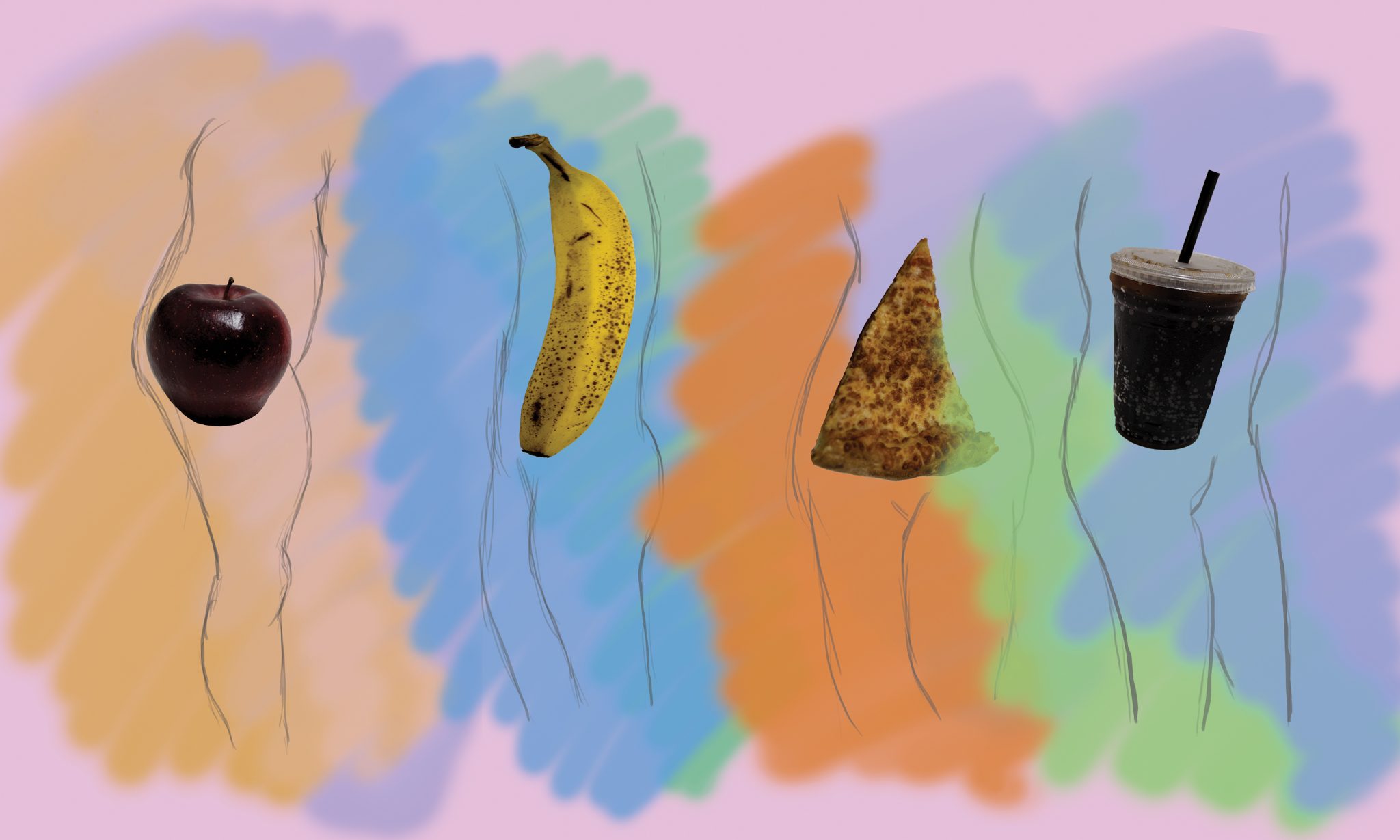

When I was eight years old, I weighed around 140 pounds.
By the time I was 17, I couldn’t weigh myself with an ordinary scale. The digital ones flashed a loaded ‘error’, while the analog ones spun more than a full circle — all the way past 300 and into uncharted, supposedly uninhabited territory.
But no matter how much my insecurities made me feel like I was, I was never really alone in ‘being fat’. As age accrues, the modern person tends toward a few extra inches around the middle. More people than not make poor choices regarding their personal health and — at least at some point in their lives — become overweight.
Yet, as ordinary as chubbiness is, that weight actually kept me from doing ordinary things: it kept me from swimming in public, out of fear of removing my shirt and displaying my hideous stretch marks. It kept me from playing sports, out of fear that I’d be seen as a joke trying to be something that he wasn’t: physically normal.
At times, it made me so ashamed of myself that I couldn’t go out in public — instead, I’d reach toward happiness by ripping into an unsatisfying, neon bag of Zesty Cheese flavoured Doritos. The chips made me fatter, the fat made me sadder, the sadness brought me back to the chip aisle.
“In my ideal world we would rethink what health actually meant and take the focus off weight and put it onto other metrics like heart health, mental health, emotional health.”
Why are we so prone to obesity, and — for that matter — why are we so cruel about it?
Food, especially in this cultural period, is ubiquitous. I spoke with Karen Lill, the owner of Lillypad Health Wellness Connections, who understood the significance of food’s constantly present status as a commercial push to repeatedly buy and consume — the byproduct of which is obesity.
“I think it’s because, socially, [food is] what’s around us constantly,” Lill said. “People used to socialize in their homes, playing a game of cards. We now socialize sitting in a restaurant, sitting in a coffee shop.”
“Food is constantly there and the restaurants — especially the fast food [ones] — really want you to buy it. So they’re constantly finding ways to put it in front of you. And they sell it cheap. We’ve become obsessed with food because it’s constantly in our faces.”
With a coffee shop or a vending machine in just about every building – and a campus that is sandwiched between blocks and blocks of high-fat, high-carb, delicious restaurants – it’s not difficult to see that there is a very real, although indirect, consumerist advocacy for obesity.
As Lill continued, she detailed how packaged foods are — at a very direct and fundamental level — an enormous proponent for that kind of obesity.
“Most packaged food has sugar added to it because they want you to buy it. That is their goal… we have so many choices and they put sugars in because they know that it makes you crave it.”
But there are other less commercial links throughout recent history that illuminate shifting attitudes toward appropriate weights. To gain better insight on this I spoke with Jenny Ellison, the curator of sport and leisure at the Canadian Museum of History and co-editor of the book Obesity in Canada: Critical Perspectives.
“If we situate the question of weight in a longer history,” Ellison said, “We see over time, say in the last hundred years in Canada — for example — in the 1920’s and 30’s Canada had a crisis of underweight. There wasn’t enough food for the population. Numerous recruits for the second world war were rejected because they didn’t meet the minimum size requirements … because they were undernourished.”
“Immediately following the war there was this Canada-first obesity epidemic. In the 1950’s there was this concern that Canadian men in particular were becoming too soft — they were all back at their desk jobs after the war — and that as a population we weren’t prepared to defend ourselves.”
“So if we look at weight in historical perspectives we often see … that attitudes toward weight shift in relation to broader social scripts and social anxieties about our population.”
But what makes this difficult to reconcile is that it suggests that society has pragmatically pushed both for and against weight gain as a society. And when compared with various points in history — specifically when it’s rarer — a few extra pounds can be viewed as a positive thing.
Yet even without a fear for our country’s being able to defend itself, our society wants nothing to do with those soft bodies and flabby stomachs.
“We can go way back in time in ancient history, and find that fat was considered a negative physical trait,” Ellison said. “In Christianity fat bodies were gluttonous and heavenly bodies were light and airy and angelic.”
“We have this long cultural history of attaching negative connotations to larger bodies, and I think in Canada and our society we place a lot of value on self-control, taking care of oneself. We place a lot of responsibility on individuals for their health and people see weight as a signifier of health.”
“We just have a lot of cultural baggage around the idea that being fat is a bad thing. That being fat signifies negative personal characteristics … fat is an easy target for people … it makes people feel safe and strong and protected to be able to say ‘well, I’m not that, I’m thin’ or ‘I’m healthy’, or whatever they think they are in comparison to a fat person.”
The solution sounds simple: to lose weight, you eat less, and maybe you exercise more.
But these fixes don’t tend to work on a practical level, especially when we consider the addictive properties in food.
“We don’t have significant evidence that diets work,” Ellison said. “If there was a scientific study to show that diets work I think the weight of the population might shift given the cultural pressure to be thin. But there is no scientifically proven weight loss method. So I think there’s a lot of emotional pain, heart-ache and money spent to lose weight when biologically our bodies aren’t playing along.”
“Even many medical doctors would acknowledge that there’s no hard and fast method for weight loss and that people tend to regain the weight. It’s a difficult data set to collect,” Ellison continued.
“What many fat activists said in my qualitative study working with women who identified as fat who had tried to lose weight … they kept going back to Weight Watchers because they wanted to lose weight, but actually Weight Watchers benefits from the fact that weight loss is almost impossible because people keep coming back and rejoining and spending their money in order to lose weight.”
As a complement to the social science, Lill’s experience operating Lillypad creates a more comprehensive picture of why diets don’t tend to work and — in many ways — it comes down again to how modern people interact.
“If you think about when you’re sitting in a restaurant,” Lill said, “and the first thing they bring you is the bread, the nice warm buns, so you start with that and then you’ve ordered your meal and sometimes your appetizer … then you have a dessert and you’re very full, but you sit at that table and you think… ‘I’ll have dessert, I’ll just take a taste.’”
“Even many medical doctors would acknowledge that there’s no hard and fast method for weight loss and that people tend to regain the weight. It’s a difficult data set to collect”
“And you keep eating it. And it’s basically [the fact that] your brain is hijacked; they’ve proven with MRIs that the reaction in the brain is the same to sugar as it is to heroin and cocaine.”
“It lights up in the same areas, so people crave it. They want it. They can’t stop thinking about it, then they have it. And they’ll eat more of it than they really want because it causes that craving.”
“On the [Lilllypad Weight Loss] program, they don’t crave the junk anymore. And the only time it becomes a problem – for the breads and the pastas and the sweets – is when they’re sitting in a social setting with friends.”
“If it’s not [sitting in front of them], they don’t have the cravings.”
Personally, I have been both very overweight and — mostly through obsessively unhealthy, ascetic diets — almost thin throughout my adult life. There are enormous, staggering differences a person realizes when they make that change.
When you lose weight, suddenly people are nicer to you; they respect you more and they tend to listen to your ideas.
They smile and nod at you in public. Members of the opposite sex treat you with friendliness and curiosity rather than doing everything in their power to ignore and avoid you.
When you aren’t fat, the world suddenly accepts you as a human being.
It’s a staggering change, and — despite being a change for the better — it’s a disturbing realization, because it shows how much people tend to assign characteristics based on superficial details.
Intrinsically, I was not a different person when I was fat than when I was thin.
But the world only saw the crux that the enormous belly represented and that then became the foundation of how they saw my identity.
As Jenny Ellison sees it, especially when related to fat shaming:
“It’s an easy target because [people] think that they understand what fat means. They think when you look at somebody’s body, that says something about who they are.”
“But I don’t think it’s true. And I think making assumptions based on somebody’s physical appearance or their skin colour or their hair or clothes or whatever is wrong.”
Especially because the associations that we draw are, in many ways, completely incorrect.
Karen Lill spoke about how a great many people are eating terribly and not properly sustaining their bodies, and yet they continue to appear to be thin.
“I wasn’t losing any [weight] until I understood how we store fat,” she said. “I see people now with the fat shaming, it’s usually somebody who’s got other issues of their own … if [they’ve] never had to deal with it [themselves], they tend to assume that it’s some weakness in you.”
“But it’s not. It’s really what society’s doing that’s causing these health problems, and that’s why there are children that are type two diabetic already. And it’s just getting worse and worse.”
Whether it’s a cultural misunderstanding of what fat means that needs to be changed, or an issue with how our society eats, Ellison sees the greatest weakness is in how we frame the conversation.
“I think that body weight is a misdirect when we’re talking about health in our society and that we need to think of health more globally,” she concluded.
“In my ideal world we would rethink what health actually meant and take the focus off weight and put it onto other metrics like heart health, mental health, emotional health.”







Leave a Reply
You must be logged in to post a comment.