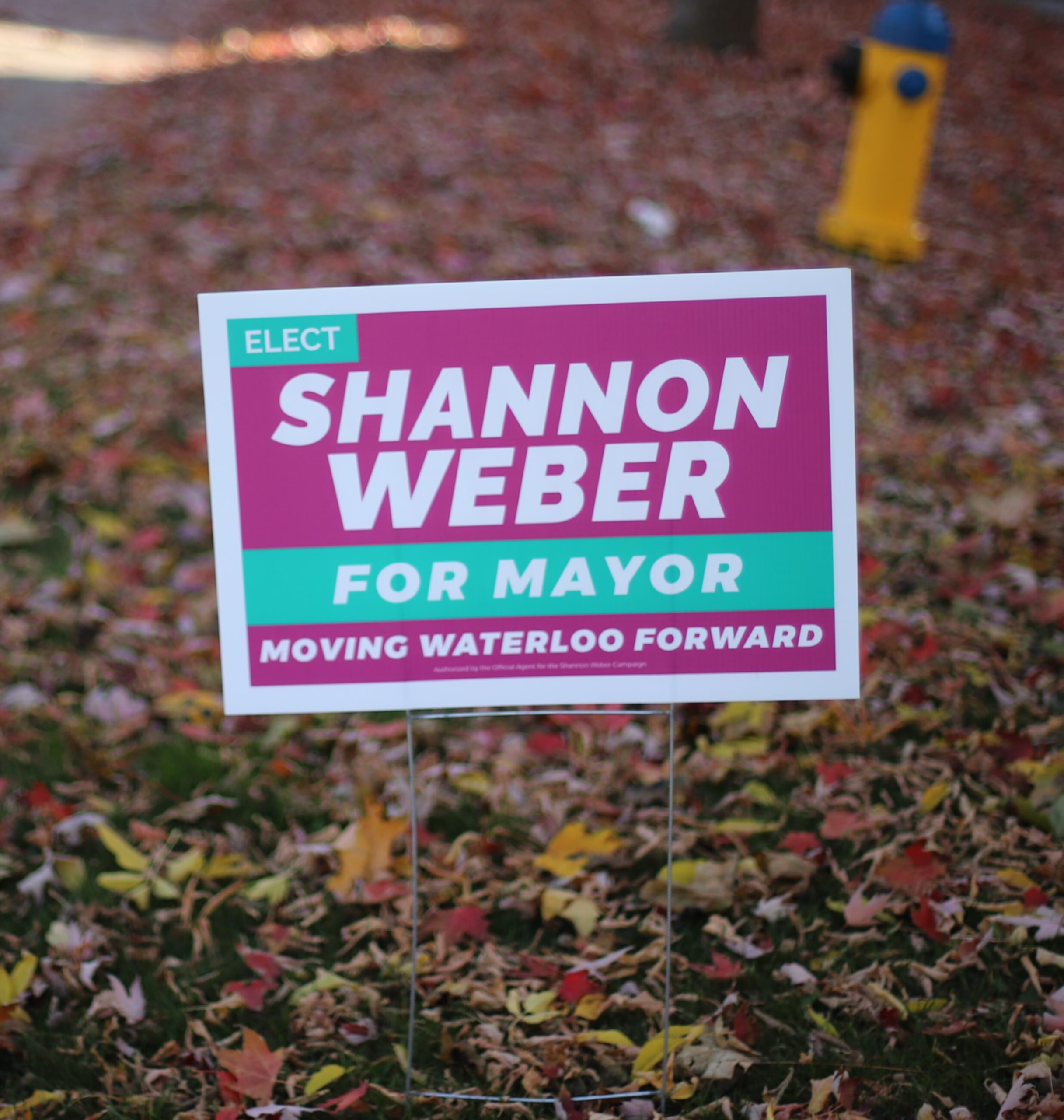
On Monday Oct. 26, residents across Ontario cast their votes in the municipal elections. Municipal elections are held every four years and elect several local positions including school board trustees, city councillors and, most notably, the mayor. Waterloo had five mayoral candidates: the incumbent mayor Dorothy McCabe, Jeyas Balaskanthan, Jamie Hari, Jerry Jiang and Shannon Weber.
After a long campaign cycle, Shannon Weber was elected mayor by a narrow majority of 52.05 per cent, beating out former mayor McCabe by approximately 6,379 votes.
As for the university’s ward (Ward 7), there were two councillor candidates: previous councillor Julie Wright and a last-minute addition of Abdullah, who did not have a platform website available and did not respond for comment on their platform. Councillor Julie Wright was re-elected for a second term, with 95.72 per cent of the votes and will serve as Ward 7’s councillor until 2030.
Municipal elections decide many important aspects of our everyday life from major construction projects in the city to transportation services such as the GRT. Yet, these elections are often taken less seriously than federal and provincial elections and students especially have some of the worst voter turnout.
To encourage more students to become involved in this year’s election, a local group, the Waterloo Forum, held a debate with mayoral candidates Dorothy McCabe, Jerry Jiang, Jeyas Balaskanthan and Jamie Hari on Oct. 8 in the Lazaridis Hall. While speaking to CBC news reporters, an organizer of the event, Jordan Bauman, said that the purpose of this event was to get young people excited about voting and to connect candidates with the student population. The group hopes to continue inspiring students to be politically active citizens.
The major themes in this year’s election were shown in a debate involving all five candidates streamed on Rogers tv, on Oct. 17.
A sizable part of this debate discussed the growing concerns of affordability for Waterloo residents, as the city and country face a worsening cost-of-living crisis. Newly elected Mayor Shannon Weber was an especially vocal critic of the city’s 24.34% per cent increase in property taxes since the 2022 election; arguing that it placed undue pressure on seniors and families. While past mayor Dorothy McCabe defended the price hike, deeming it necessary to continue running essential city services during a time of inflation.
Another hot topic involved the need for increased development in Waterloo. Candidates Jiang and Balaskanthan took a similar stance, arguing for increased co-operation between corporations such as the City and other tech start-ups. Weber said her priorities would be to cut red tape and fast-track approvals to streamline building developments. While Hari emphasized the need to prioritize the rights and safety of unhoused residents when planning major infrastructure developments. McCabe took the time highlighting developments under her leadership such as the use of city-owned land to build affordable housing and securing Waterloo’s first hospital.
Lastly, candidates discussed their plans to ensure efficient snow removal and pothole fixes as winter quickly approaches. While this issue may seem trivial, keeping sidewalks clear of snow and slush is critical for ensuring the city remains accessible throughout the winter. All candidates promised to dedicate city services to snow clearing and stressed their desire to keep the city functioning effectively during the colder months.
How precisely the city’s newly elected leaders plan to tackle these and other issues facing the city is yet to be seen, but it’s clear the mayor and council will face a busy and challenging next four years.
Contributed photo by Kendra Schmidt