If I could do away with one secular conceit, it would be that “religious belief is fine, as long as it is kept private.”
The assumptions behind that statement are baffling to me, because they seem to have a profound misunderstanding of the way the human heart works.
It is quite obvious that human beings aren’t very adept at confining deeply-held beliefs about the universe to the more clandestine recesses of our hearts.
I don’t mean that we’re all confessional types who spill out our beliefs to anyone who will listen. I mean that matters of the heart – these deep-seated beliefs – form the way we live in society.
They are the framework from which our rational deliberation hangs and they form our pattern of thought on the deepest concerns of society – ethics, justice, law or religion – are all, in some way, dependent on them.
It’s the very nature of religious beliefs that makes it impossible to cordon them off from the public square.
That’s not to say that we haven’t tried. I think the “established non-belief” of secularism has governed university culture for some time now.
Public universities have, in recent memory, been rather disenchanted places where research and intellectual inquiry have been conducted without reference to God, gods or the spiritual world (save for in seminaries and other beloved reliquaries of antiquated thought).
I suppose that’s okay, since there are many questions that can be properly explored without invoking spiritual or metaphysical claims.
However, I think our established non-belief has gone too far; instead of merely trying to create a spiritually neutral environment, it actually serves to marginalize and silence metaphysical and religious points of view.
This is a problem because secular reason, empiricism and science all fail to adequately explore the really big questions like “what is good?” or “what is best?”.
We ought to be asking those questions here at Laurier. That means we may have to welcome back perspectives that were previously inadmissible to the secular marketplace of ideas.
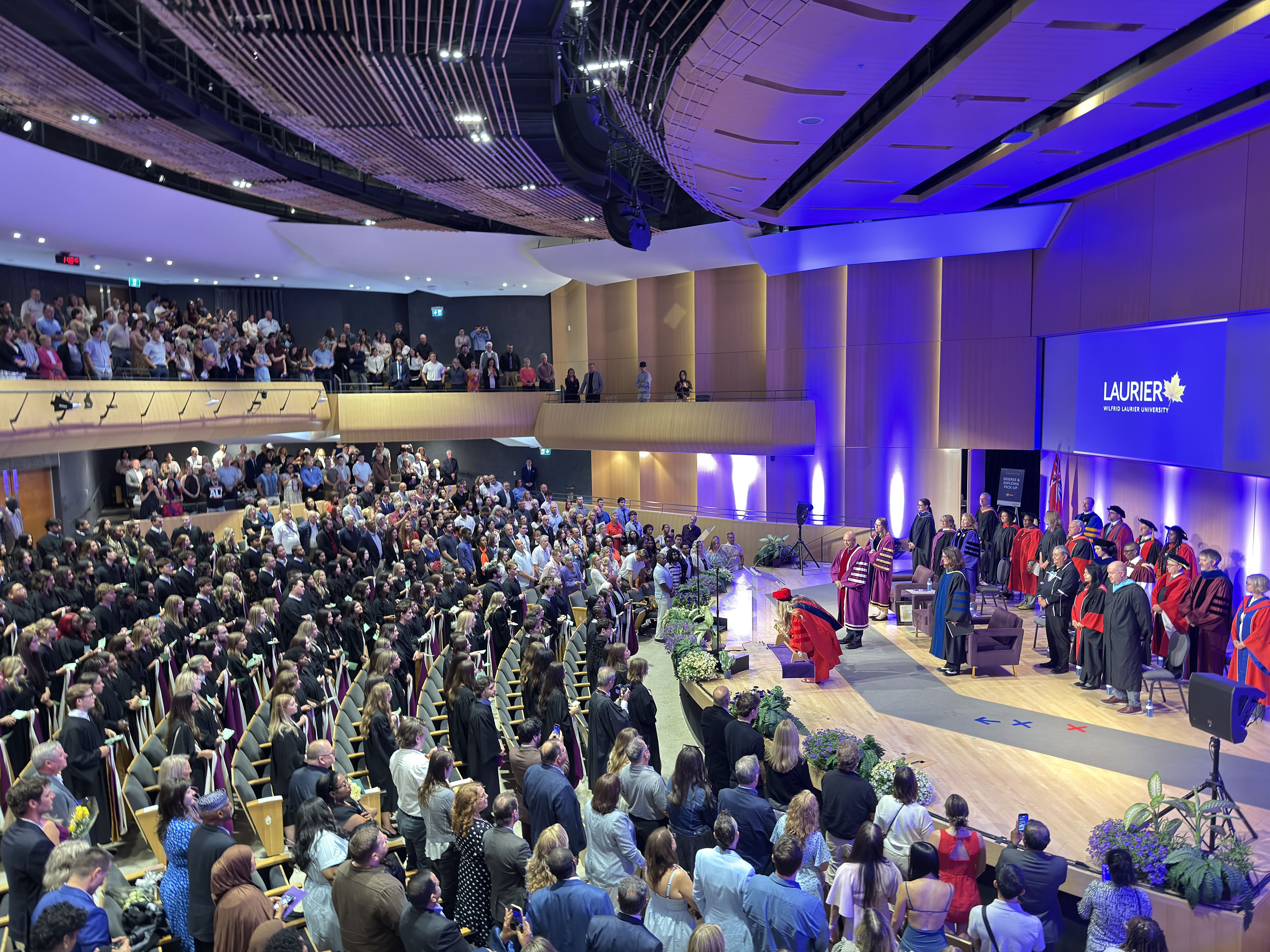
Lately, I’ve noticed something of a spiritual thaw at Laurier. I’ve seen religious practice and ritual taken seriously, with the addition of multi-faith space and prayer rooms. Over the past year, I’ve witnessed the membership of the Chaplain’s Office double.
I’ve seen the work of religious organizations on campus flourish and blossom beyond expectations.
These things reflect the growing awareness that spiritual and metaphysical questions are not merely matters of private concern, but have relevance to public thought and conversation.
I don’t envision that Laurier will declare a religious affiliation any time soon, nor do I want it to (no need to hit the neo-theocracy panic button).
If, as an institution, it remains officially secular, that’s great; as long as that official secularism doesn’t become a hegemonic force against religious points of view.
I hope Laurier continues to be a place that fosters a principled pluralism where people are encouraged to speak honestly and publicly from their own particularity without having to hide their deeply-held beliefs behind some veil of secularism.
No doubt that portends more arguments, and leaves no hope of consensus, especially since we all start from different places when it comes to beliefs.
But it’s also more accommodating to the kinds of creatures we are, allowing space for the way the concerns of the heart influence the questions in our minds.