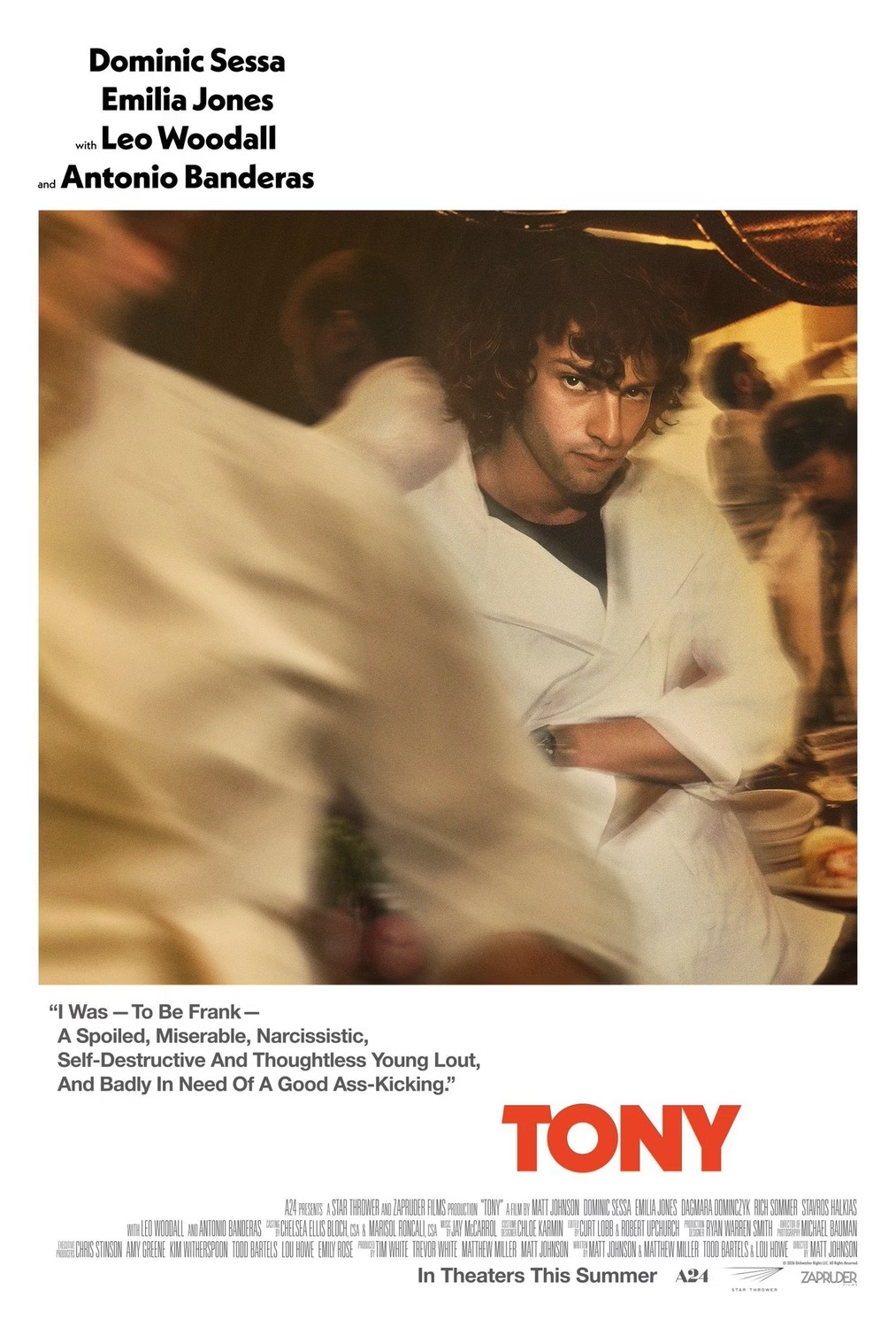
Coming hot off the heels of Nirvanna the Band the Show the Movie, Director Matt Johnson returns with Tony, a flawed but engrossing film about an episode in the early life of late celebrity chef, Anthony Bourdain. Tony spins the earliest chapters of Bourdain’s debut and breakthrough novel, Kitchen Confidential: Adventures in the Culinary Underbelly, into a coming-of-age narrative about a wayward young Bourdain, played by The Holdovers’ Dominic Cessa, finding his identity in low cuisine, but some of its writing shortcomings hold it back from being a great film.
In the film, Bourdain spends a summer learning life lesson from a (functionally) anonymous chef played by Antonio Banderes, a bad boy played by Leo Woodall, and a love interest played by Emilia Jones. The film plays fast and loose with the source material, the scope is cut from two summers to one, and all of those characters are respectively: recreated, cross-bred and invented entirely for the sake of tone or narrative, to create a film (and a fully-fledged character arc) out of a relatively brief snippet of Bourdain’s text.
By adapting only an episode from the book, the film dodges the biggest pitfalls of the genre. Sparing the audience from the humble but ambitious beginnings, the dogged labour montage to reach the hollow heights of fame, the climactic artist or estate-approved decision that corrects their antisocial fatal flaw and their consequent discovery of fulfillment in their art and life. Johnson’s film, buoyed by some occasionally excellent directing, succeeds in its ability to dwell in a place and time, not pulled along by the irresistible demands of the genre.
Johnson’s Cape Cod feels surreal and self-contained. The white sand beaches feel both beautiful and alien, a house party is smoky and isolating, the ferry rides to and from Provincetown are impenetrably grey and feel like loading areas between entirely divorced realities. The film is about Tony, and Johnson knows it. The whole world seems to bend around Tony, characters barely even seem to interact with each other, except in such ways as then inform their interactions with him, or which develop his lived experience. While this develops the way that the film portrays the transformative power of Provincetown, Massachusetts; it also reflects the film’s greatest weakness, the script feels half baked.
While every ten minutes there’ll be a fun line, the dialogue generally runs the spectrum between boring or overly edgy, and this really means that every non-Tony character (and occasionally Tony himself) feels less like a character, and more like an archetype. When Leo Woodall is on screen, his bad boy big brother character is fun to watch, but given a synopsis, you could predict every action and line he delivers on screen before he does it, not because of character consistency, but because it feels like you’ve seen every character before.
This is not always a bad thing, an archetypal character can absolutely support a film, but the lifelessness of the characters that surround Cessa do a disservice to Bourdain’s lively textual description of Provincetown. The film’s culminating clam bake scene would mean a lot if Provincetown had been a character in the film, but it isn’t so it doesn’t.
Finally, it must be noted that perhaps unsurprisingly given the film’s human subject, Tony is a film for the boys; but where Bourdain’s masculinism is admitted and obvious given the utter dearth of female characters in his chapters, the addition of a ham-fisted romance plot, that highlights the way female and male characters are treated differently in the film.
There are only four female characters in the film. Firstly, the Freudian disapproving mother, who appears in two scenes. Then there is a killjoy feminist (also in two scenes), a waitress with about two lines, and the aforementioned love interest. If Banderes’ character makes stereotypical decisions that befit specifically his plot role, Jones’ decisions are incomprehensible if you don’t consider that they had to wrap up the runtime, and this was the solution.
This, in addition to the way that queerness has been washed out of Bourdain’s original text, makes it impossible not to be disappointed in the version of the film that was, considering what might have been. Ultimately, the film is a fun watch, but despite all the acting and directing in the world, I still