As of January 2026, the Region of Waterloo reached a critical bottleneck. Severe water capacity constraints within the Mannheim Service Area, which encompasses Kitchener, Waterloo and parts of Cambridge, forced a temporary halt on all new development approvals.
Although existing water supplies are safe, the water supply system lacks the necessary buffers for repairs, prompting the need for emergency plans regarding new infrastructure and enhanced water supplies.
While the Region of Waterloo struggles with population growth and land development, Peter Huck, Distinguished Professor Emeritus at the University of Waterloo, notes that the Mannheim district relies on a complex “Integrated Urban System.”
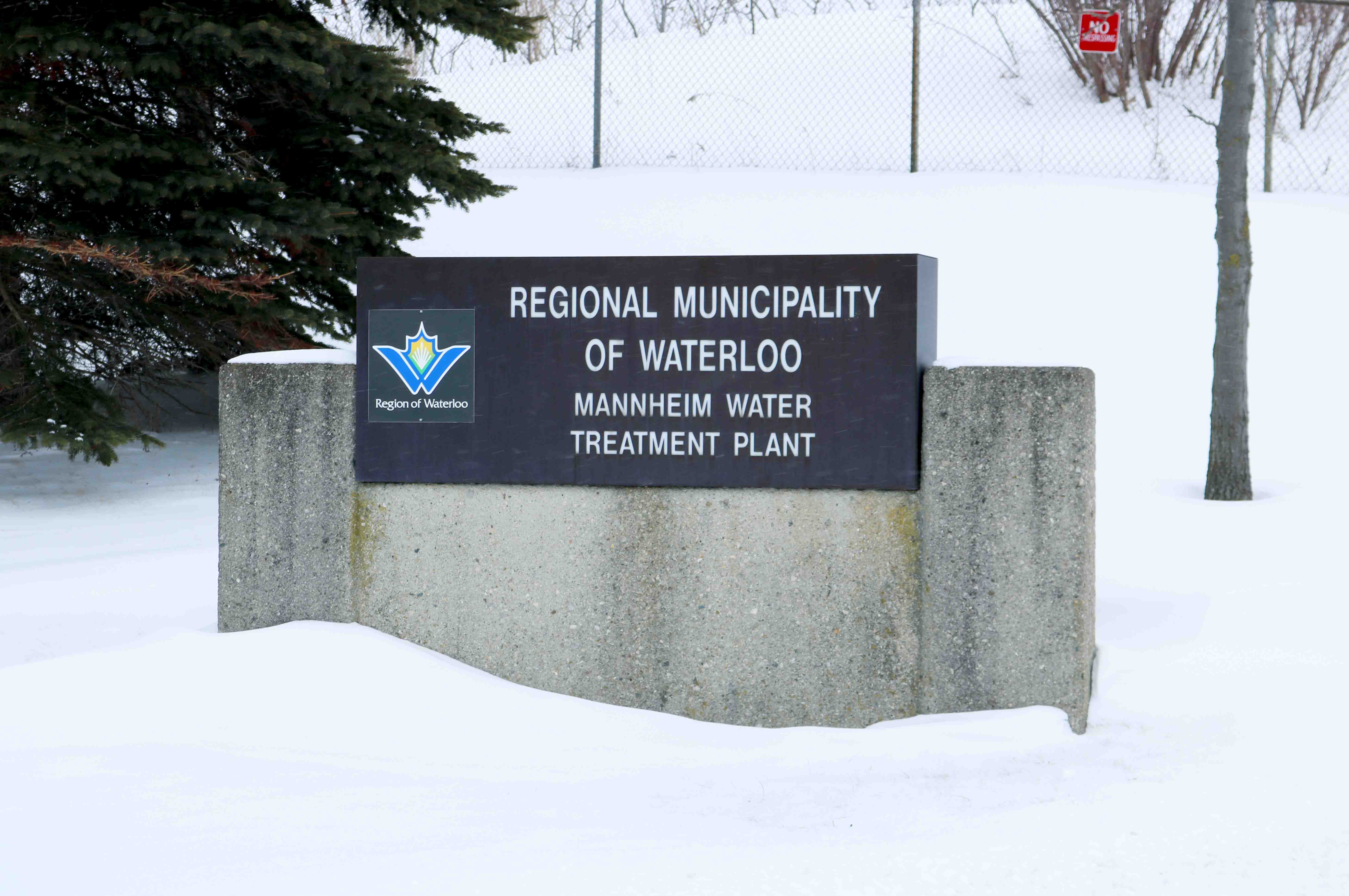
“The Region of Waterloo is using two types of water,” Huck said. “One is groundwater from about 100 scattered wells, and the other is surface water from the Grand River, treated at the Mannheim Treatment Plant.”
The Mannheim Plant began operations in 1994.
This creates a technical bottleneck where the wells are at their full capacity, and increasing river draw is limited by the need to protect downstream ecosystems.
The Region initially identified the issue in November 2025 and announced the findings in December 2025, citing that rapid population growth and aging infrastructure led to demand exceeding available capacity.
The issue has been further discussed and detailed in a Jan. 13, 2026, meeting of the Region of Waterloo’s Sustainability, Infrastructure, and Development committee, where staff confirmed the need for a revised water supply strategy and infrastructure investment.
During the Jan.13 committee meeting, Sam Nabi, Director of Hold the Line WR, challenged the Region’s ‘surprise’ at the crisis, noting that the 2015 Master Plan had already identified the infrastructure and pumping stations necessary to bolster the Integrated Urban System.
Nabi questioned why these long-planned interconnections failed to prevent the current bottleneck and challenged the lack of groundwater context in regional planning. He argued against Provincial oversight, calling instead for a collaborative solution led by the local municipalities directly affected by the freeze.
Huck said that the current 60 per cent operating capacity may be due to equipment that requires more upgrading or replacing it to restore it to its full design potential.
While Nabi focused on historical planning, Joseph Puopolo, co-CEO of Polocorp Inc., laid out a stark economic forecast for the Region. Puopolo warned that halting development approvals would trigger a “dry-up of municipal development charges, rendering capital budgets irrelevant and driving skilled trades and private investment out of the Region toward more stable municipalities.
Additionally, he said that investments will be directed elsewhere, citing a further erosion of public trust and inevitable tax hikes if the construction industry remains stalled.
To prevent what he claims is an economic exodus, Puopolo presented a detailed action plan to the committee, urging Council to decouple planning approvals from water allocation immediately.
The proposed strategy includes a 30-day sprint to: define a capital plan for the immediate refurbishment of the Mannheim system, bridge the gap by initiating a link between the Middleton and Mannheim water systems, and audit high-capacity users by meeting with the Region’s 50 largest water consumers to incentivize rapid reduction in usage before the August peak.
However, the solution for the water capacity issue isn’t as simple as building more pipes and infrastructure. Alex Latta, associate professor in the Department of Global Studies and the Department of Geography and Environmental Studies at Wilfrid Laurier University, said that while ceasing development entirely is not the answer, the Region must re-evaluate its population targets. The said that poorly managed, rushed development—such as the controversial Wilmot land assembly—poses a potential threat when undertaken without adequate water demand studies.
“We need to re-evaluate the scope of population growth that we have said we can accommodate in our region’s Official Plan,” they said. Huck also highlighted the “social” side of the capacity equation: conservation. While the Region has implemented odd-even lawn watering and low-flush toilet incentives, Huck said that further measures might begin impacting residents’ daily lives, raising the question of whether residents would support the “further restrictions” necessary to measurably increase the buffer between supply and demand.
While a Great Lakes pipeline is often discussed as a solution for capacity issues, both Latta and Huck remain cautious. Latta said it would be a “last resort” due to extreme costs, urging the Region instead to adopt aggressive conservation measures and stricter regulation of commercial water permits.
“One of Canadians’ deeply held myths is that we have boundless supplies of fresh water,” said Latta. “Starting to value and respect water is the first step to living in tune with the hydrological realities of our region.”
Contributed Photo/Sangjun Han