Every November, Canadians begin to wear a small, red poppy pinned to their jackets, sweaters and coats. Some hang them from rear-view mirrors; others place them gently on cenotaphs or graves. The simple, bright flower—made of fabric or crepe paper—appears everywhere in the weeks leading up to November 11th: Remembrance Day, also known as Poppy Day.
As someone new to Canada, I was first struck by the quiet beauty and unity of this tradition. For the past few days, I have watched my coworkers, neighbors and even strangers on the street wear these crimson symbols with solemn pride. My curiosity led me to uncover the profound story behind this small flower—a story rooted in history, loss and enduring hope.
The poppy became a symbol of remembrance after the First World War, one of the deadliest conflicts in human history. The link between the flower and fallen soldiers traces back to the battlefields of Flanders, a region in northern France. After the devastating battles of 1915, the land was left barren and scarred by shellfire. Yet, amid the destruction, red poppies began to grow in abundance, their color striking against the muddy, war-torn soil. It was said that the flowers sprang from the disturbed earth enriched by the blood of fallen soldiers.
This haunting image inspired the Canadian soldier and poet Lieutenant Colonel John McCrae, who served as a field surgeon during the war. In 1915, he wrote the now-immortal poem “In Flanders Fields.” The opening lines—
“In Flanders fields the poppies blow
Between the crosses, row on row…”
—captured the grief, sacrifice and quiet persistence of those who served.
McCrae’s poem became one of the most famous literary testaments to war and remembrance, and the poppy soon emerged as its living emblem.
After the war, the poppy was adopted as a symbol of remembrance across the Commonwealth. In 1921, the Great War Veterans’ Association in Canada (a precursor to today’s Royal Canadian Legion) began distributing poppies to raise funds for veterans and their families. That same year, millions of Canadians pinned on the flower for the first time, marking the beginning of a national tradition that continues more than a century later.
Today, the poppy represents more than just remembrance—it stands for gratitude, resilience, and unity. When Canadians pin that small red flower to their lapel, they are not only honoring those who gave their lives in past wars but also recognizing the sacrifices of current service members and their families. The poppy has become a bridge between generations—a reminder that freedom, peace and democracy were bought at a tremendous cost.
Wearing a poppy is also a deeply personal gesture. For some, it is a way to honor ancestors who served in the World Wars, Korea, Afghanistan or peacekeeping missions abroad. For newcomers like me, it is a way to participate in a shared national ritual that transcends background or origin. It invites reflection on the universal values of courage, service, and remembrance—principles that bind Canadians together, regardless of where we come from.
Each year, at the eleventh hour of the eleventh day of the eleventh month, the nation pauses for two minutes of silence. Across cities and towns, from Parliament Hill to school gymnasiums, people stand quietly to remember. It is a powerful moment—one in which the red poppy, though small, carries the weight of history and hope.
As we approach Remembrance Day, let us wear our poppies with pride and purpose. Let them remind us not only of the soldiers who rest beneath the fields of Flanders but also of the enduring promise of peace they fought to secure.
Lest we forget.
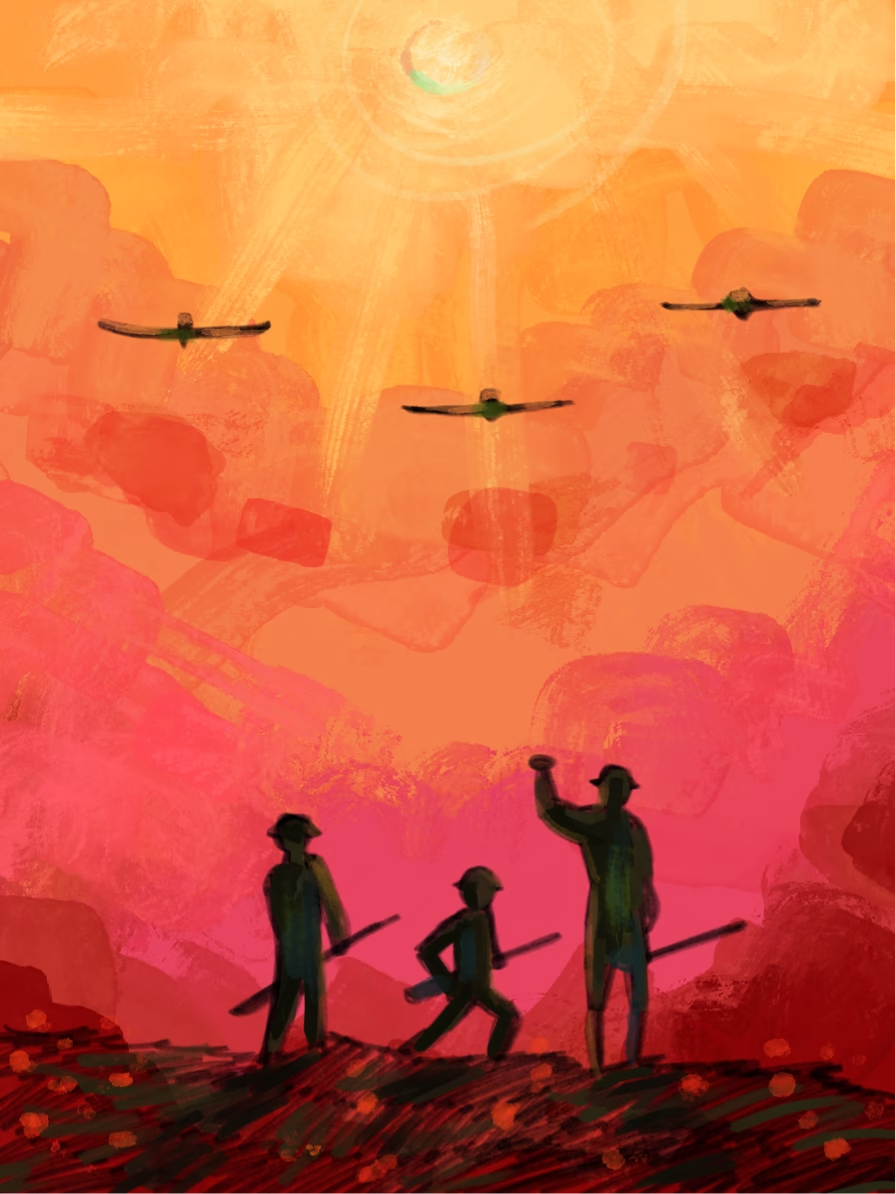
Contributed Graphic/Clara Rose