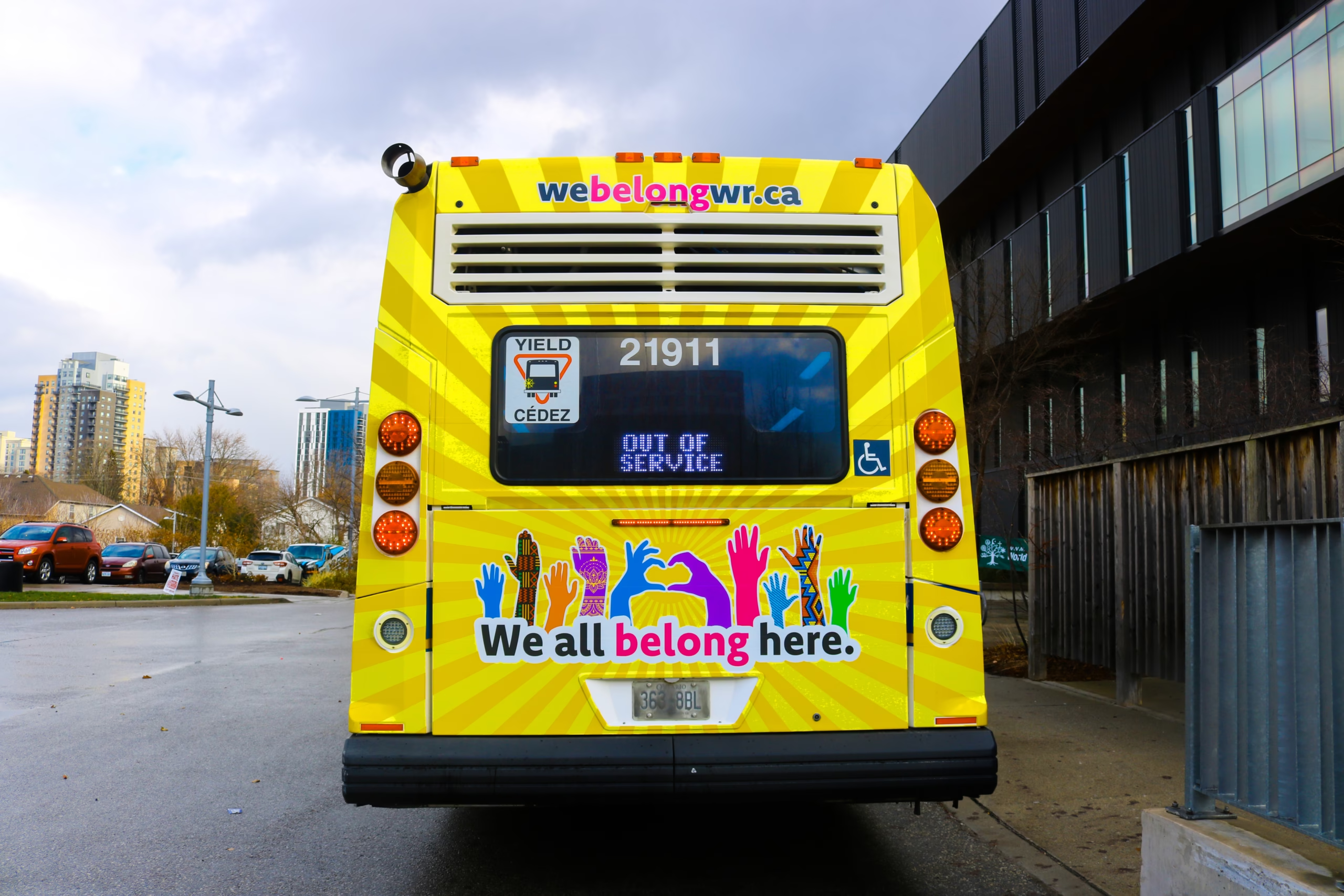
The Region of Waterloo launched its “We All Belong Here” campaign on October 23, 2025, as a collective effort to combat hate-based crimes within the region and promote a sense of belonging within the local community.
The initiative comes at a time when the region has been grappling with some of the highest rates of reported hate crimes in Canada, highlighting the urgent need for awareness, education, and proactive community engagement.
Katie Wilhelm, an Indigenous designer and consultant based in London, Ontario, brought the campaign to life by incorporating ideas and feedback from meetings, community consultations, public engagement, and focus groups, along with input from Community Safety and Wellbeing Plan (CSWP) steering committee members and community leaders. Her work ensured the campaign reflected the diverse voices, experiences, and concerns of Waterloo Region residents, creating messaging that is culturally responsive and actionable.
The campaign is a collaboration between the Region of Waterloo and the Combating Hate Action Table (CHAT), a committee formed by over 30 community leaders from various sectors, including Heena Mistry, the Equity, Diversity, and Inclusion (EDI) Director, and Aishah Awan, the EDI Coordinator at Wilfrid Laurier University. As part of the CSWP, the action table works to ensure that hate, discrimination, and identity-based harm are addressed collectively across the region.
Fauzia Baig, the Director of Equity, Diversity and Inclusion with the Region of Waterloo and a member of the Combating Hate Action Table, said this is a community-wide campaign led by community leaders and many organizations coming together to discuss how the region can combat identity-based harm.
“One of the key things that kept coming up is that we needed to bring awareness to the issue, alongside building belonging to those who experienced harm, hate crimes, or identity-based harm,” said Baig. “The hope is that this campaign will launch significant awareness across the region, helping people understand what is happening, the experiences of those affected, and their role in supporting change and standing up to identity-based harm.”
Baig explained that although Waterloo Region has seen anti-racism and inclusion campaigns in the past, they decided to host this campaign now since the community feels unsettled around the increasing rise of hate crimes and identity-based harm—especially with Statistics Canada reporting that Waterloo Region has the highest hate crimes per capita in Canada. The community no longer reflects a sense of belonging, and youth are experiencing challenges or discrimination.
“We felt like something needed to be done immediately,” said Baig.
Part of the campaign’s strategy is to normalize reporting of hate crimes. Baig noted that while reporting may initially increase statistics of hate crimes, this will be seen as a positive outcome.
“When we understand what is happening, we can work toward better solutions,” Baig said.
Early indicators of success include activation events, with over 100 community and system partners attending the official launch of the campaign, and more than 20 campaign-related events taking place or scheduled. “This shows the campaign is connecting with people and being integrated into schools, workplaces, and community organizations.”
Schools in the region are central to the campaign’s reach. The Waterloo Region District School Board (WRDSB) actively integrates the We All Belong Here message into daily school life, encouraging students and staff to reflect on inclusion, belonging, and their roles in building a safer, more welcoming community.
“The campaign reinforces and amplifies the work we do every day,” said Scott Miller, Director of Education at the WRDSB. “It serves as a community-wide reminder that belonging is a shared responsibility. The campaign helps us highlight the importance of inclusion, allowing for important conversations, and engaging students, staff, parents, families, and caregivers in building a region free from hate and harm.”
Miller says he wants students and staff to know that they are valued, supported, and encouraged to bring their authentic selves to WRDSB.
“We also want to empower them to stand up against discrimination, support one another, and contribute to a culture where everyone feels safe and included,” Miller said.
According to Miller, hate often stems from prejudice, fear, misinformation, and systems that allow inequity to persist. Combating hate requires education, empathy, and community collaboration.
“We can reduce the impact of hate by creating spaces where students and staff feel they belong and are supported in this work through partnerships with parents, families, caregivers, community organizations, and local leaders,” Miller said. “When we approach this work together, we strengthen our collective ability to stand against hate.”
The Ripple Effect Education Foundation, led by Executive Director Laurel Boytim, also played an integral role in supporting the campaign. Boytim explained that the organization provides education to children, youth, and adults around conflict resolution, peacebuilding, social justice, anti-racism, and anti-hate work.
“So, the topics of identity-based conflict and harm, and anti-racism, anti-hate, anti-oppression, are a part of our everyday work already,” said Boytim. “When a police officer involved with the Combating Hate Action Table learned about our work, he invited us to participate. That was nearly two years ago, and we’ve been an active part of the table ever since, collaborating with around 30 diverse community leaders and organizations.”
She added that Waterloo Region is one of the most diverse communities in Canada, and it has been one of the top reported regions for hate crimes and hate-based incidents. This campaign is essential to fostering a more equitable and inclusive space.
The foundation has also brought the campaign into post-secondary environments, including the University of Waterloo. They launched mini events, workshops, and educational programming.
“We promoted the campaign across the university, with activities including a wrapped Grand River Transit bus, short speakers, and interactive sessions. Our aim is to educate the next generation and embed values of belonging, empathy, and anti-hate early on,” Boytim said.
Boytim also highlighted the preventive benefits of education for children and youth.
“The earlier we can instil understanding and empathy, the more it can shape adults who value inclusion and peace,” said Boytim. “We’ve seen adults reflect that these lessons, if taught earlier, could have profoundly changed their lives. It’s about upstream prevention and building a stronger, safer community.”
The campaign’s impact is also being supported by Wilfrid Laurier University.
“Our EDI team was asked to participate in community stakeholders’ consultation,” said Aishah Awan, EDI Coordinator. “This campaign reflects our commitment to address bias-related incidents on campus as we seek to foster a shared sense of community.” Awan added that the We All Belong Here campaign complements the university’s ongoing efforts to respond to harm through the Reporting Incidents to Support Equity (RISE) form.
Boytim encouraged community members to take an active role.
“There is a calendar on the campaign website for events and mini launches. People can print posters, start conversations in their workplaces, schools, religious or friend communities, and bring these ideas into all the different communities they belong to,” said Boytim. “This grassroots approach can create a ripple effect across the region. For more formal training, anyone can contact the Ripple Effect Education Foundation for workshops on inclusion, anti-hate, belonging, and related topics.”
According to the campaign website, addressing systemic racism and hate is critical to a safe community and will require concrete actions. Waterloo Region has promised several launch events by CHAT members to promote the campaign, including a community event on Tuesday, Oct. 28, at the Breslau Community Centre.
Contributed Photo/Sangjun Han