
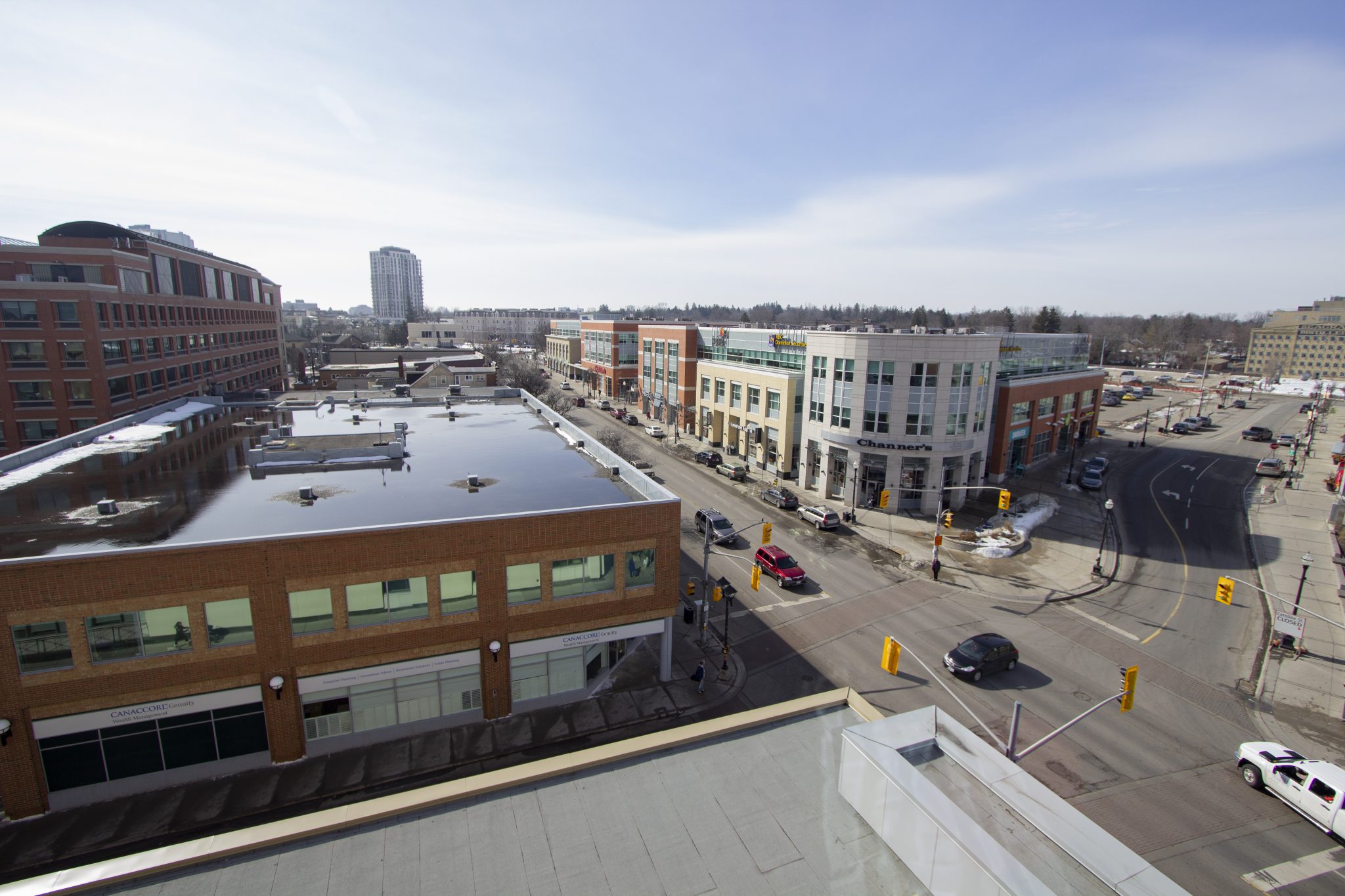

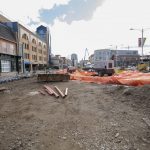
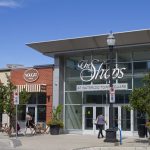
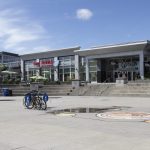
Editor-in-Chief, Safina Husein, discusses the transformation of Waterloo’s core before, during and after construction
Change — the one word that comes to my mind when I think back to uptown Waterloo a decade ago.
Ten years ago, uptown Waterloo was a local-oriented location. The core held a certain small-town charm.
Janice Welch, owner of Just For You Fine Lingerie, described uptown Waterloo as exciting when she first opened her business 11 years ago. In a sense, uptown emitted an atmosphere that felt like a new beginning.
Businesses and people were coming to uptown with a new vision, which made it an exciting place to be a part of.
“The local economy was thriving, we’ve always had a very high business occupancy rate, we had a lot of local businesses, lots of mom and pop stores, stores that were run by local residents, so that was really great. We were doing pretty well in our core,” said Melissa Durrell, councillor of Ward 7 — where uptown is located.
However, aside from a thriving local economy, uptown Waterloo didn’t have many other amenities. The core of uptown was simple and small.
“A decade ago, it was a one street town. King Street was the main street, that’s where all the action happened,” Durrell said.
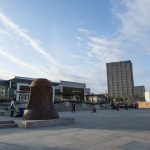
“Our public square was a parking lot. It was a very car friendly place you could say. And it was very concrete. And we knew that we needed to make changes as a municipality although we had a lot of great stuff.”
“But we wanted to make an uptown core that wasn’t just a one street core, we wanted to see it expand and we also wanted it to be more people friendly.”
In an effort to make uptown a renowned area in which people could easily access through various modes of transportation, enjoy an array of amenities and more, uptown Waterloo underwent several years of drastic change and construction.
The first big change to come to uptown Waterloo was the creation of the Waterloo Public Square approximately eight years ago.
“You’ll always be able to walk into a store in uptown and meet the owner. I think that’s just part of our culture here, but we’re also growing and there’s more businesses here so we’ll start to see a bit of a mix.”
Before the square was built, existed a parking lot in its space, leaving little or no room for those coming to uptown to enjoy open space.
“After that, the core started to expand in a way it hadn’t expanded before,” Durrell said.
Once the town square was complete, uptown began to grow outwards and beyond King Street.
For example, businesses and organizations began to move into the core of Waterloo, opening up on Regina Street, Erb Street and the streets beyond it.
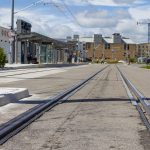
“The biggest thing would be the King Streetscape and the LRT which have been pivotal,” Durrell said.
“We made sure that when we did redevelop King Street, we wanted to do it once, and we wanted to do it right. So we thought of all modes of transportation, whether you’re walking or wheeling or cycling or driving … there’s space for everyone to be able to take part.”
“I’ve always called this the ‘Uptown Renaissance’, I’ve been using that term, I think we’re really turning into a metropolis in a way,” Durrell said.
Amongst the exciting and grandiose changes coming to Waterloo’s core, however, were local businesses and residents having to endure over four years of constant construction.
When LRT construction began, King Street was closed to traffic for a significant amount of time, making it difficult for residents of Waterloo to come to uptown.
“Every single person who would come in would say ‘oh it’s so bad up here’ and I would try and spin that around to be a positive,” Welch said.
“But your morale does go down because you’re constantly having to try and let people know [uptown is] a good place. But overall, as far as customers were concerned, they were staying away there’s no doubt about it.”
Since LRT construction began, businesses in uptown have been vocal and have spoken out regarding their significant decrease in sales as a direct result of construction.
In conjunction with combating the rise of e-commerce, many local businesses have struggled to stay afloat.
And as a result, several businesses in uptown have had to shut down or relocate due to lost sales during construction.
As the main components of LRT and streetscape construction are now complete, businesses have reported an increase in sales — however, uptown has not seen the amount of foot traffic that was seen before construction began.
“Everything is enhanced from what it used to be and we have added new buildings, we’ve got new businesses, it’s all very much enhanced from what we had before. I think that the vibe of having that new streetscape … really makes it a place to be — a destination — and that’s super important.”
“The construction is there in order to make it exciting again and to bring people into the area, so it’s just something you have to go through in order to get to the end,” Welch said.
As Waterloo residents slowly come back to uptown now that roads are open, they will likely see that uptown no longer holds that small-town feeling.
“This kind of small town feel of uptown is an interesting perspective because I feel that uptown is changing, we’re not really a small town,” Durrell said.
“We’ve got two of the best universities in Canada, we’ve got CIGI which is an international think-tank, we have the Perimeter Institute which is the top physicist organization in the world; we’re a big player on an international scene and we need amenities to go along with it.”
Indeed, uptown Waterloo seems to be entering a completely new era — leaving behind much of the small-town roots it once provided to residents of Waterloo.
“When you come to the uptown core, it’s a different feel. It’s a cool feel and that vibe is very energetic and alive, but you also feel safe walking down the street; you can see that it’s bike-able and walkable and liveable and you get to experience that as you walk in uptown,” said Tracy Vankalsbeek, executive director of Uptown BIA.
Present-day uptown holds significant enhancements in comparison to what it offered 10 years ago.
The King Streetscape project brought forth larger sidewalks and bike segways, making uptown an overall safer, more accessible place to be.
“Everything is enhanced from what it used to be and we have added new buildings, we’ve got new businesses, it’s all very much enhanced from what we had before. I think that the vibe of having that new streetscape … really makes it a place to be — a destination — and that’s super important,” Vankalsbeek said.
“We’ve always had that local feel, that’s our tag line here is the whole choose local … [lots of businesses are] feeling very positive about things and are excited for even more folks to come as the LRT starts to bring people in.”
Indeed, uptown no longer feels like a small town. Its upgrades make it a completely new space. However, the small businesses in the core of uptown will always preserve the local feeling of Waterloo.
“I think we’ve always hit above our weight in uptown and I think we’ll continue to do so, and I think our retailers are right there along side us,” Durrell said.
“You’ll always be able to walk into a store in uptown and meet the owner. I think that’s just part of our culture here, but we’re also growing and there’s more businesses here so we’ll start to see a bit of a mix.”


Leave a Reply
You must be logged in to post a comment.