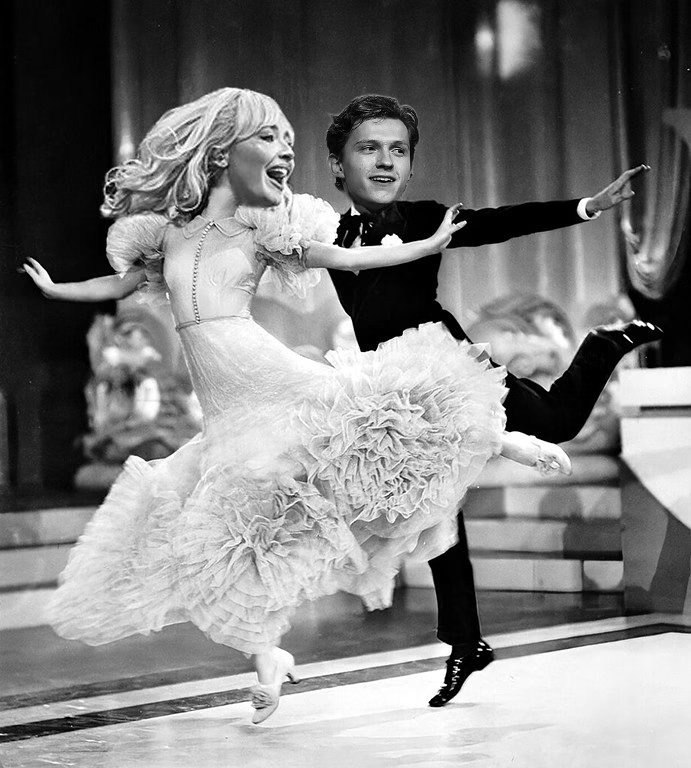
In December 2021, yet another biopic was announced to join the ever-growing canon of celebrity biopics, this time chronicling the life of legendary dancer, actor and singer Fred Astaire. Around the same time, it was revealed that Tom Holland, pop star Sabrina Carpenter and Margaret Qualley, had been cast in the film playing Fred Astaire, Ginger Rogers, and Astaire’s older sister and original dance partner, Adele Astaire, respectively. In the past five years alone, Aretha Franklin, Whitney Houston, Bob Dylan, Amy Winehouse, Bob Marley, Weird Al, Marilyn Monroe, Michael Jackson, Elvis and Priscilla Presley have all gotten the biopic treatment. Future biopics in various stages of development include projects based on Ronnie Spector, The Beatles, Audrey Hepburn, Joni Mitchell, Nat King Cole, Britney Spears, Snoop Dogg and Marilyn Monroe (again).
While there’s nothing wrong with celebrating the lives of influential figures, you have to wonder when Hollywood’s fascination with dead famous people became a substitute for original storytelling. At what point are these biopics less about honouring someone’s legacy and achievements, and more about capitalizing on nostalgia and pre-existing fanbases? With three of entertainment’s biggest stars attached to the Astaire project, it has me wondering whether we actually need another biopic and if Hollywood has literally anyone else to cast.
In recent years, Hollywood has increasingly relied on casting well-known faces like Timothée Chalamet (A Complete Unknown), Austin Butler (Elvis) and Jacob Elordi (Priscilla) to generate buzz, rather than taking chances on lesser-known talent. However, being famous and being talented aren’t mutually inclusive. Performances like Abel Tesfaye’s (The Weeknd) in The Idol (2023), and Kim Kardashian’s in American Horror Story have been critically ridiculed and raise questions about whether celebrity status is sometimes prioritized over acting ability.
Rather than introducing audiences to original stories or emerging talent, studios are comfortable relying on the same five white actors (and Zendaya), names that already carry significant cultural weight in order to generate box-office success. From a marketing standpoint, a contemporary A-list celebrity portraying an older A-list celebrity basically promotes itself. But just because there’s already an audience for an influential figure’s life story doesn’t mean that it needs to be dramatized.
Astaire himself reportedly stated in his will that he didn’t want a film or screen portrayal made about his life – he had no desire to have his life misinterpreted. His widow, Robyn Astaire, has opposed the upcoming film, reportedly sending multiple letters to producer Amy Pascal in November 2025 asserting that Astaire’s will explicitly prohibited film and screen portrayal of his life. Despite her objections, Astaire’s daughter has publicly endorsed the project, and Astaire’s grandson is involved as both a consultant and co-producer. For a film intended to honour Astaire’s legacy, shouldn’t his wishes about how it’s portrayed matter?
There’s also the matter of how biopics choose to portray their subjects. In Swing Time (1936), Astaire performed in blackface during a dance tribute to tap dancer Bill “Bojangles” Robinson. Although the biopic is yet to be released, it raises the broader question about how Hollywood chooses which aspects of a celebrity’s life deserve recognition and which are conveniently left out.
For the record, I don’t think that all biopics are bad. When done well, these films can introduce audiences to overlooked figures and draw new perspectives on already familiar stories. In defence of the upcoming Astaire biopic, the film is actually based on Kathleen Riley’s The Astaires: Fred and Adele, which highlights the siblings’ early careers and successes. This film has the potential to introduce audiences to Adele, who never achieved the same level of fame as her brother, despite being an equally accomplished performer in her own right.
But the question remains whether Hollywood’s reliance on recognizable names, both as performers and subjects, allows commercial appeal to take precedence over original storylines and quality performances. In the case of Fred Astaire, there’s the additional question of whether honouring someone’s legacy should be at the price of their expressed wishes. Ultimately, my very professional opinion is that Hollywood should go for quality over quantity when it comes to these celebrity biopics.
Contributed graphic by Anna Koehler