What does it mean to see the entire world? What are the snowy mountains for us? What are the boundless plains, the thick forests, or the deep oceans? And what is the whirr of the plane’s engine, groaning underneath us?
Can one see everything, yet see nothing? Does witnessing the richness of the world mean realizing your own loneliness? The globe in its endless expanses is nothing in the eyes of the pilot; the minute villages and fields before his eyes are quickly ignored.
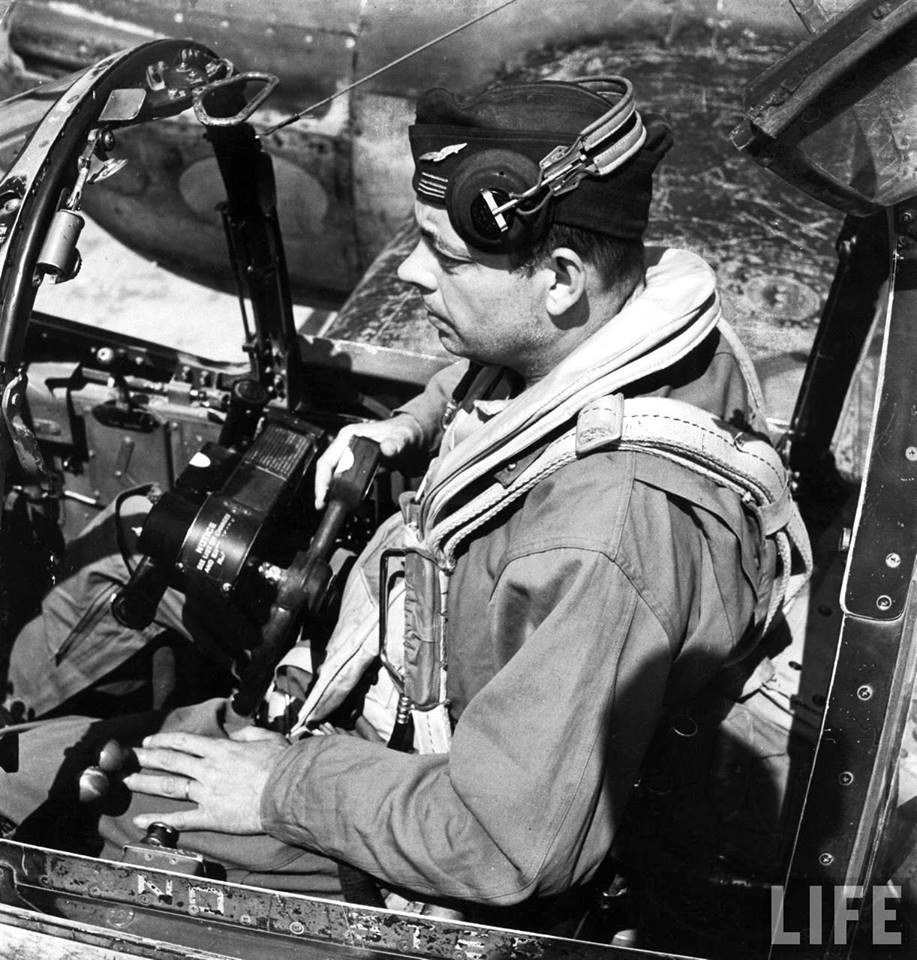
From heights up to 30,000 feet, the pilot glides over us all, yet cannot wave his gloved hand at us. With his home in the starry sky, does he ever wish to land, and linger contentedly amongst the wingless? This was certainly the case for aviator and author Antoine de Saint-Exupery, a French aristocrat who lived in the beginnings of the 20th century,
Saint-Exupery was an Aeropostale pilot: his duty was to transfer thoughts and feelings throughout the globe. It was on a journey to Punta Arenas, Chile, that he truly learned of his profound isolation.
While standing before a well at night, watching a woman disappear into the dark streets of a village, he noticed his frequent loneliness. He remarked, ‘‘I am a stranger. I know nothing. I do not enter into their empires. Man in the presence of man is as solitary as in the face of a wide winter sky in which their sweeps, never to be tamed, a flight of trumpeting geese.’’ (67) From France to Chile, the pilot sweeps over thousands of kilometers of undulating water and level fields. From France to Chile, the pilot rushes away from families and communities, finding only the black sky as his companion. Like the goose, Saint-Exupery flies away from mankind to faraway distances, befriending only his own thoughts.
In the Sahara Desert, with the Bedouins, Saint-Exupery found a connection.
Doomed to roam the earth like Cain, both the Bedouins and our pilot find that they have no set home. Though inside their colourful tents they laughed and drank tea together, both parties felt their astounding isolation.
Though the Bedouin rides on the hump of a camel, and our pilot above on a winged machine, both are masters of the road, both are on a never-ending journey of movement and sensation. And both are alone. ‘‘Then, truly and for the first time,’’ Saint-Exupery soberly states, ‘‘the Sahara became a desert.’’
The groan of the engine, the screeching roar of the wind, the soft metallic whispers of the plane: these elements constitute the pilot’s family. These elements remain constant while the rest of his world varies and turns.
The hardened traveller’s universal truth is thus that the world is lonely; the globe is empty.
When one looks at the planes of a great height, one notices that villages and towns huddle together. Is it fear of this loneliness that the cottages squeeze together so closely? Is the globe truly so lonely that we find we must hold each other so tightly?
It is only the one on the road, our pilot, that quits the safe, warm haven of community and floats alone in the aerial realm. It is only our pilot who tours the globe: one man and the entire world. Though he sees everything, he is alone. Though his life is one of the thrilling adventures, his real thrill would be to delight in the comforting silence of a home well known.
Works Cited: De Saint-Exupery, Antoine. Wind, Sand, and Stars, translated by Lewis Galantiere. Boston, Houghton Mifflin Harcourt.
Contributed Photo/Archives