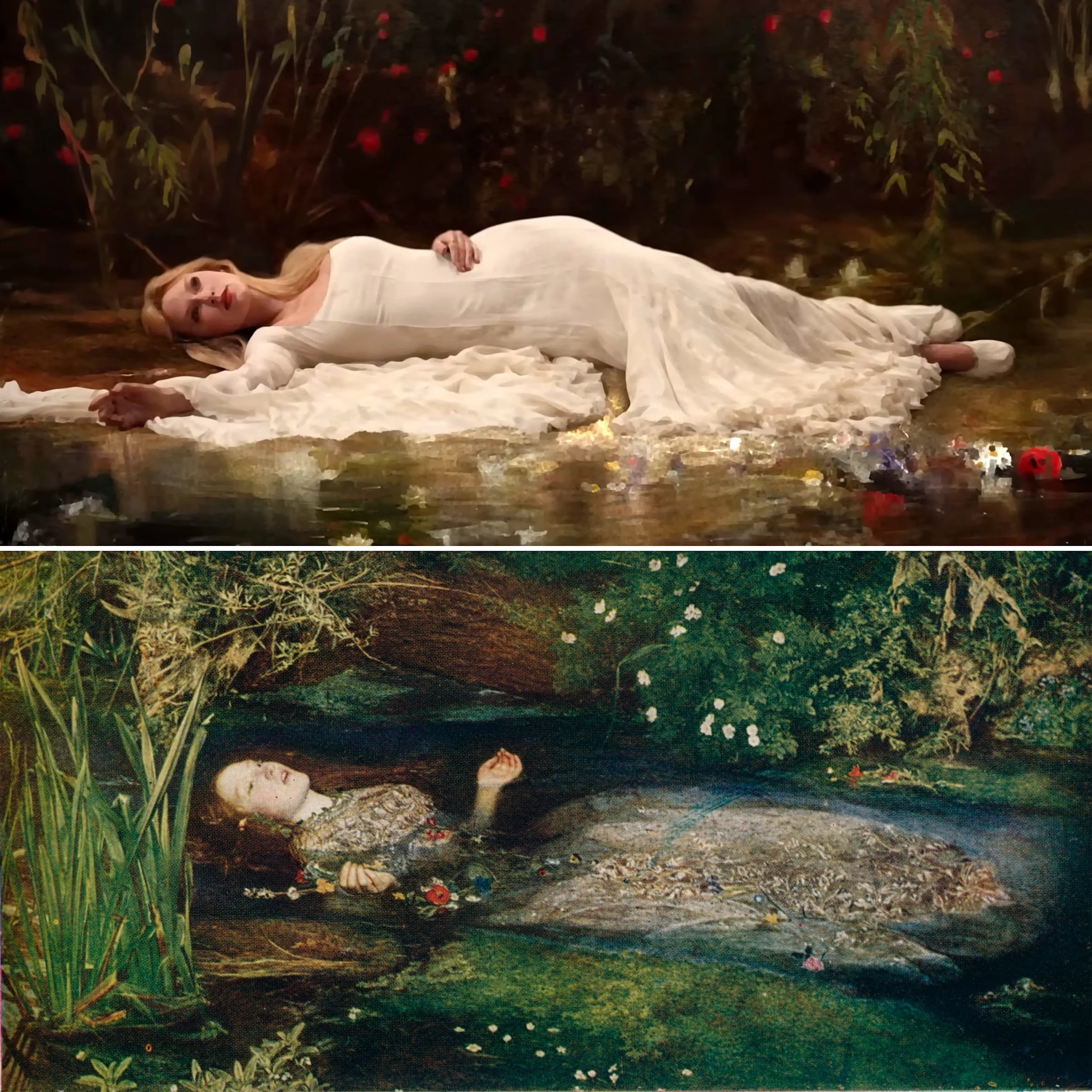
The title character of this song, Ophelia from Hamlet, is mischaracterized in the lyrics of the track
The song Fate of Ophelia, written by Taylor Swift, is what I would consider a fun listen. It has a great rhythm and is fun to dance to. However, the title character of this song, Ophelia from Hamlet, is mischaracterized in the lyrics.
In the story of Hamlet, Ophelia is a character who represents a woman’s lack of freedom and, throughout the play, is used as a way for men to gain power. She is a pawn in everyone’s game, and the only way she can see to get out of their reach is to drown herself.
In this song, however, she is treated as a damsel in distress who died of loneliness. Swift writes, “The eldest daughter of a nobleman, Ophelia lived in fantasy, but love was a cold bed full of scorpions, the venom stole her sanity.” Already, there are problems.
Part of the reason Ophelia goes mad is that she is disillusioned with the world around her. In one of the first scenes of the play, her father and brother lecture her about her virginity. They talk about how she should not give herself up to a man who very likely will throw her away later. Ophelia is not living in fantasy; she is fully aware of the world she exists in; this disillusionment is part of her tragedy.
The next two lines of the song are just as hollow, describing how love stole her sanity. She did not lose her mind because of Hamlet; she loses her mind because she is constantly controlled and put in harm’s way by men without having any say in the matter.
In the chorus, Swift talks about how her lover saved her from the fate of Ophelia, alluding to the idea that Ophelia went mad and died over loneliness and not systemic oppression.
Swift writes, “No longer drowning and deceived. All because you came for me,” which exemplifies this. Ophelia didn’t kill herself because Hamlet dumped her, she killed herself because it was the only way she could ever gain full autonomy as a person.
Throughout the play, everyone else uses her, but when she drowns herself, that is a choice she made for herself. This is the antithesis of Ophelia; she had no choice in her life. Ophelia is a deeply complex character, who is a symbol of women’s oppression in history and today.
By simplifying her into another damsel in distress, Taylor Swift has done a disservice to not only the character, but to the image of a poet she has created for herself. Swift’s new album has disappointed fans in many ways, from lackluster lyricism to the out-of-touch narrative, and it has not been a fan favorite.
This song is especially disappointing as Ophelia is such a beloved character and one that could be used to highlight oppression against women in the United States under the current administration. Instead, she is shown as just another girl who needed to be saved by a man, who she decidedly is not.
Painted by John Everett Millais, Millais painted Ophelia between 1851 and 1852
“Ophelia,” bottom, was painted in the 1850s.Taylor Swift/YouTube; The Print Collector/Getty Images