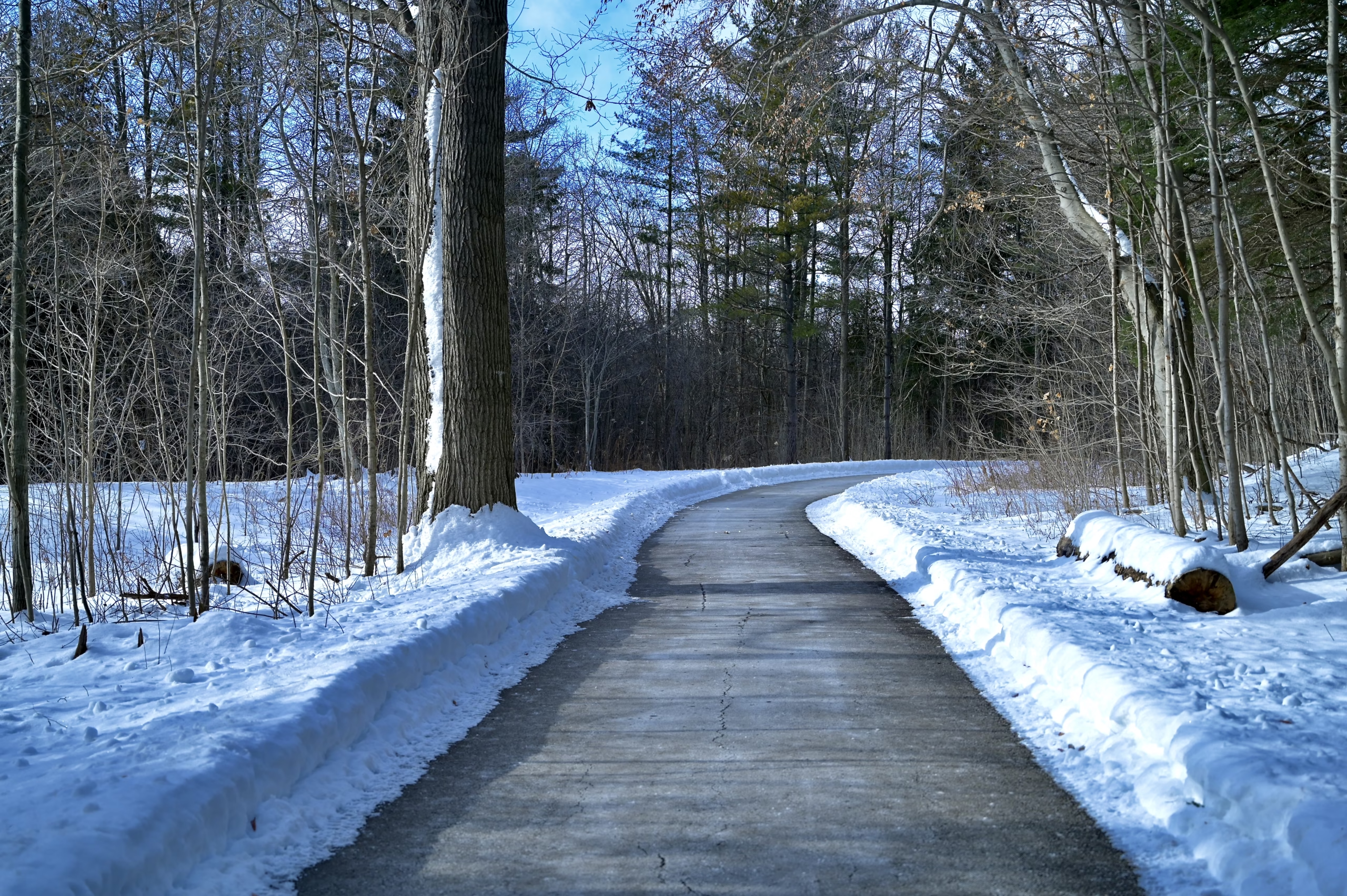
Exam season in the dead of winter can feel like a perfect storm—not only is the work piling up, but the days are getting shorter. You might walk out of a 2:30 to 5:30 class and realize the sun has already given up on you, despite a pile of assignments on the horizon. A lot of the time, seasonal depression can feel like a secret, personal problem. In reality, Seasonal Affective Disorder (SAD) is a collective, studied pattern—a pattern you’re allowed to get help with.
For Tasmida, an international student from Myanmar, that pattern showed up in a way she could feel both physically and mentally. Back in Myanmar, winter doesn’t even really require a sweater. Here, her first Canadian winter meant grey skies, and a cold dullness she was not used to. “I already had a vitaminD problem even before I came” she told me. “On grey days, I would feel pain in my back and just not want to do anything. In summer I feel fine; it’s really the grey weather and winter that affect me.”
Seasonal depression, or more formally, Seasonal Affective Disorder, is well documented, accounted for in mental health assistance programs. The Centre for Addiction and Mental Health (CAMH) defines SAD as “a type of depression that occurs during the same season each year. It usually happens in the fall or winter, but some people may experience season-linked symptoms in the summer”. In other words, it’s not just feeling “a bit down” in the colder months. SAD is a reoccurring form of major depression that CAMH notes, can interfere with work, school and relationships—not something anyone is expected to just white-knuckle their way through.
Laurier hosts a whole scaffold of support for this. The Student Wellness Center on each campus offers confidential mental health support, on top of medical support. Students also have 24/7 options through our student health plan with the Empower Me program, a confidential mental health and wellness service. Good2Talk is Ontario’s free and confidential helpline for postsecondary students, another text and phone service with trained professionals.
Beyond these options, Laurier also offers Indigenous Student Centers, for students seeking connections within the indigenous student community, as well as the International Student Support team, for students living away their previous support system. International Students Overcoming War (ISOW), whoprovide scholarships for students like Tasmida, also provide support with teams amidst troubling times.
Before you think your case of the winter blues is not bad enough to seek counseling, there is no such thing as a lower threshold to when you can and should receive help. Even if you think you’re managing your case of SAD, it does not hurt to simply get a second voice telling you that you’re doing okay.
At the same time as reaching out to support lines, sometimes the most powerful changes start from within. External supports matter, but so does the way you frame your life. Rónal Aguirre, a mature student who came to Canada from Colombia as a refugee 11 years ago, puts very bluntly: you can’t do winter here all by yourself. He describes to me in our interview: “Immigration brings you sadness, your fears, your traumas” he said, “but also your hopes and your goals. The key is to have a goal here, because it gives you a perspective, where you are, and what you want. I decided to feel less ashamed of my English and just get involved. If you don’t get involved in society, you won’tsucceed.”
For Rónal, winter actually ended up becoming his favorite season; he built a life that makes the gloomy winter months feel like they are part of something instead of an interruption. His experience shows that while SAD and winter stress are very real, life can appear very differently when you have purpose and a community around you.
For some, like Rónal, winter can be a manageable part of life, but it can still affect any student’s health. Many Laurier students are fortunate to have strong support systems at home, or within faith-based traditions. But there’s also a significant group of students who might not be able to access their usual support networks physically in the winter months.
The International Student Wellness Center and the communities that form around it can offer an alternative to solitude. They offer events, peer connections, and staff that can help with the difficulties of being in a new, cold, place. No one should have to navigate the dark days, heavy courseloads, and culture shock completely on their own.
Tasmida even pointed towards other groups beyond formal counselling that made a huge difference. For her, those groups were the Muslim Students Association, writing center events, and the Rohingya Center of Canada, Based in Kitchener. As Tasmida described, simply being around people who resonatedwith her and her culture made the cold months feel less isolating “I was so Introverted when I first came” she said, “Now I’m totally different, I’m talking to people”.
The silver lining in dealing with Seasonal Affective Disorder is that it’s at least predictable. Families and universities already plan for flu season; there’s no reason we can’t treat the winter season as a moment to review your mental health. Laurier has thankfully laid the groundwork for where students need togo. It’s just up to students to access this support and acknowledge SAD as something worth speaking up about.
Contributed Photo/Sheryl Madakkai