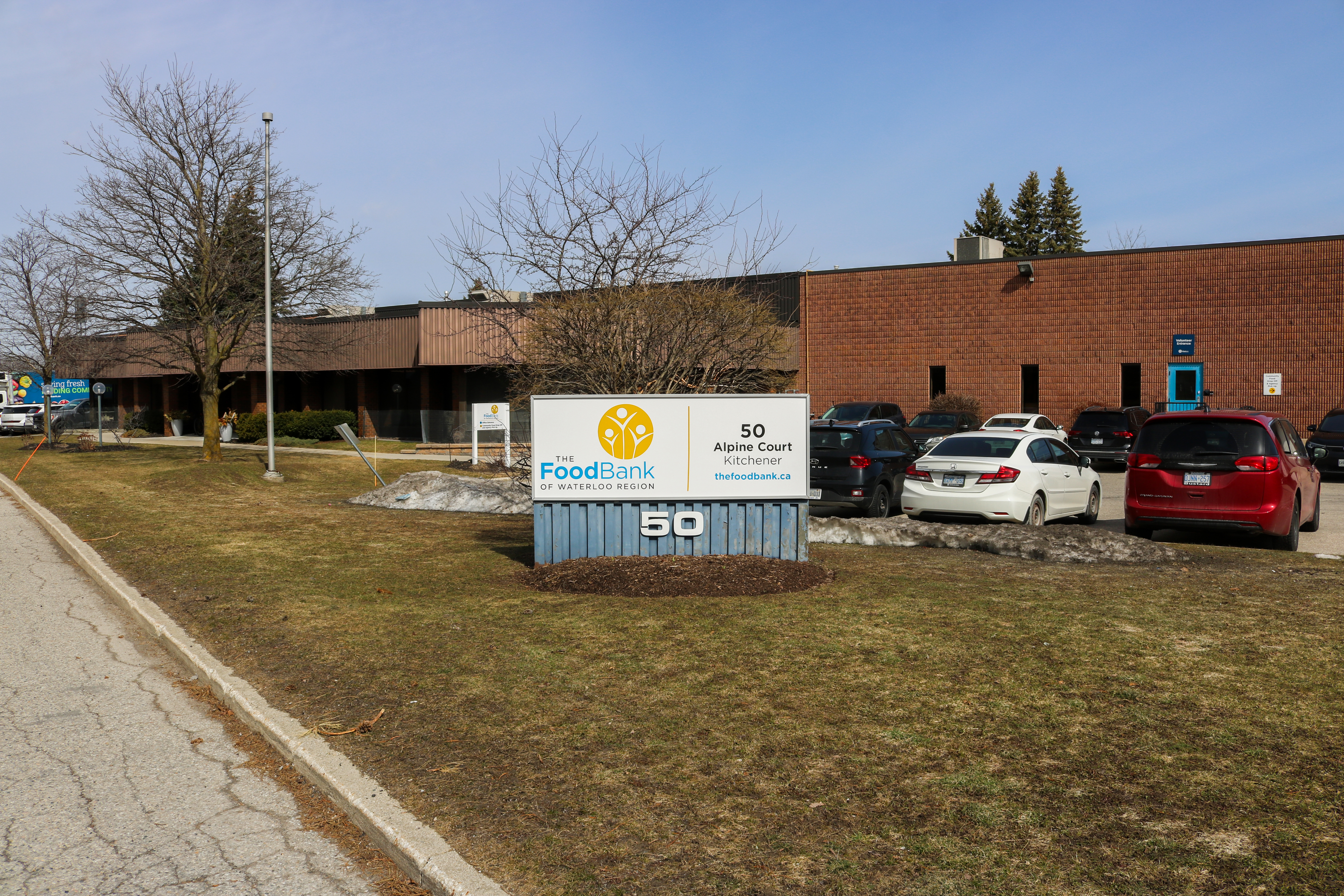
On March 9, the Food Bank of Waterloo Region and MCC Ontario formed a partnership to address the growing issue of food insecurity in Waterloo Region.
The Food Bank of Waterloo Region reported that 73,000 residents are unable to obtain food and the problem worsens with the increase in gas and grocery prices. Over the next three years, MCC’s New Hamburg facility will produce 28,000 cans of pre-cooked chicken annually for the food bank, thanks to a $600,000 commitment from the Lyle S. Hallman Foundation.
“We would like to clarify that food insecurity is not caused by a lack of food; it is driven by a lack of income,” Michelle Rickard, Marketing and Communications Manager at the Food Bank of Waterloo Region, said. “In our community, there is enough food available. The challenge is that many individuals and families do not have enough money to afford the basics… after paying for housing, utilities, and other essential expenses.”
Nearly 73,000 residents in the region are accessing hamper programs, including 26,000 children. The crisis is hitting the most vulnerable hardest, with a seven per cent increase in children and a nine per cent increase in older adults needing support over the past year.
“Food insecurity can affect anyone,” Rickard said, adding that more participants are now living in private or social housing, staying with family or friends, or turning to emergency shelters.
The partnership with MCC Ontario’s New Hamburg facility provides a stable anchor for the region’s protein supply, which is often the most expensive and difficult item to source. Each can provide 144 grams of protein with a five-year shelf life—a critical resource for those with limited access to fresh food or cooking equipment.
“Protein is one of the most in-demand and often most expensive items for us to source, so having 28,000 cans provided each year makes a real difference,” Rickard said. “It also adds variety. In the past, shelf-stable protein options were often limited to items like canned tuna.”
Beyond the immediate nutritional value, the funding allows for a strategic reallocation of resources. Because the Hallman Foundation covers the cost of the meat, the Food Bank can shift its own purchasing power to other high-priority items in short supply across its 61 partner organizations.
To reach those facing transportation barriers, the Food Bank continues to utilize its Mobile Pantry, which visits locations like the Stanley Park Community Centre and Lincoln Road Chapel. However, the organization maintains that charity alone is not the final solution for the region’s hunger crisis.
Beyond community foundations and non-profit partnerships, the Region of Waterloo provides direct financial support to the network. According to Scott Cressman, Communications Specialist at the Region of Waterloo, the Region provided grant funding of $1.5 million to the Food Bank in both 2025 and 2026.
“The Region is focused on providing many essential services for the community, including roads, public transportation, waste collection and management, public health, and paramedic services,” Cressman said. “We rely on community partners to meet other needs in the community.”
This reliance on “community partners” highlights the gap that organizations like MCC Ontario and the Hallman Foundation are currently racing to fill. However, the Food Bank maintains that while these grants and partnerships are vital “band-aids,” the root cause remains unaddressed.
“Addressing food insecurity long-term requires solutions that improve income security and make life more affordable for people across our region,” Rickard said.
Contributed Photo/Sangjun Han