

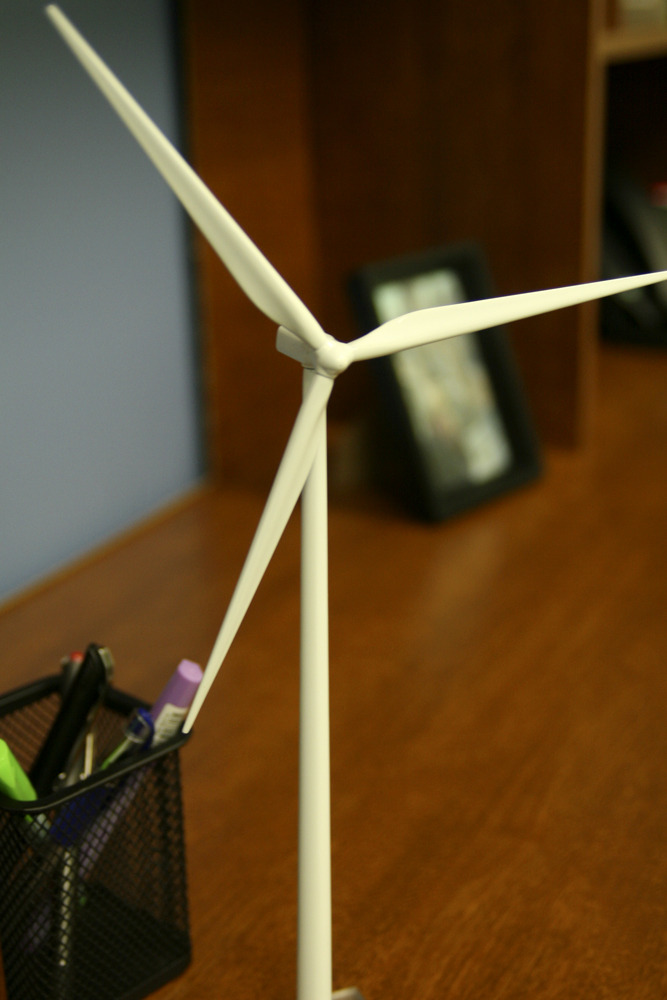
First-year students living in residence at Wilfrid Laurier University have been learning about sustainability through the annual residence energy competition since the program was launched in March 2012. Run by the sustainability office, the competition was recently highlighted by the International Association for the Advancement of Sustainability in Higher Education (AASHE) in its annual Higher Education Sustainability Review.
“There was profiling of universities all over the world,” explained Claire Bennett, sustainability coordinator at Laurier. “So it was just neat to see them choose one of our programs to put in there, and they even chose a picture to put in too, which was unique to a lot of the other universities.”
AASHE is a membership organization based in the US which seeks to “help create a brighter future of opportunity for all by advancing sustainability and higher education.” They work with universities, such as Laurier, across the US and Canada and offer programs to support sustainability.
Laurier has been featured previously in the monthly bulletin which AASHE puts out; this features sustainability stories from American and Canadian campuses.
“The AASHE higher ed review is a synopsis of everything happening over the course of one year based on what we’ve captured through the bulletin,” Monika Urbanski, programs coordinator and analyst at AASHE, explained.
This was Laurier’s first time being featured in the annual publication.
The residence energy competition held at Laurier has residences pitted against each other to reduce their energy consumption over the course of a week.
“The program is important to us because reaching out to students in first year is probably the most important thing you can do, because they are going to be here over the next couple of years,” said Bennett. “So they need to know that the service is there for them and just being aware what we’re up to.”
Bennett believes that one of the reasons AASHE selected their program to be profiled is because they are able to show concrete evidence that sustainability saves money.
“We were able to show how we helped save money through reducing greenhouse gas emissions, through reducing energy consumption and we saved our organization this amount of money,” she continued.
Urbanski confirmed that numbers grab AASHE’s attention when looking at stories from universities.
“It helps people get an understanding of, ‘okay, this is what could happen if I implemented something like this on my campus,’” she said. “And so that was one of the reasons that we highlighted Laurier, is because they had this energy competition and they were able to quantifiably explain ‘this is what we saved, and this is what we averted.’”
By profiling initiatives like Laurier’s in their annual review, Urbanski explained that their purpose is twofold. The first is to recognize institutions for the good work they are doing. The second is to bring awareness to the initiatives that are being implemented, which will in turn hopefully inspire other institutions to do something similar.
For Urbanski, having your campus profiled means you’re doing things in terms of sustainability.
“It definitely means this particular initiative caught our attention – that’s good news because there were over 1700 bulletin stories last year and there are a little around 40 initiatives highlighted in the publication,” she said. “It definitely means, ‘hey, you guys caught our attention, you’re doing something great, keep it up.’”





Leave a Reply
You must be logged in to post a comment.