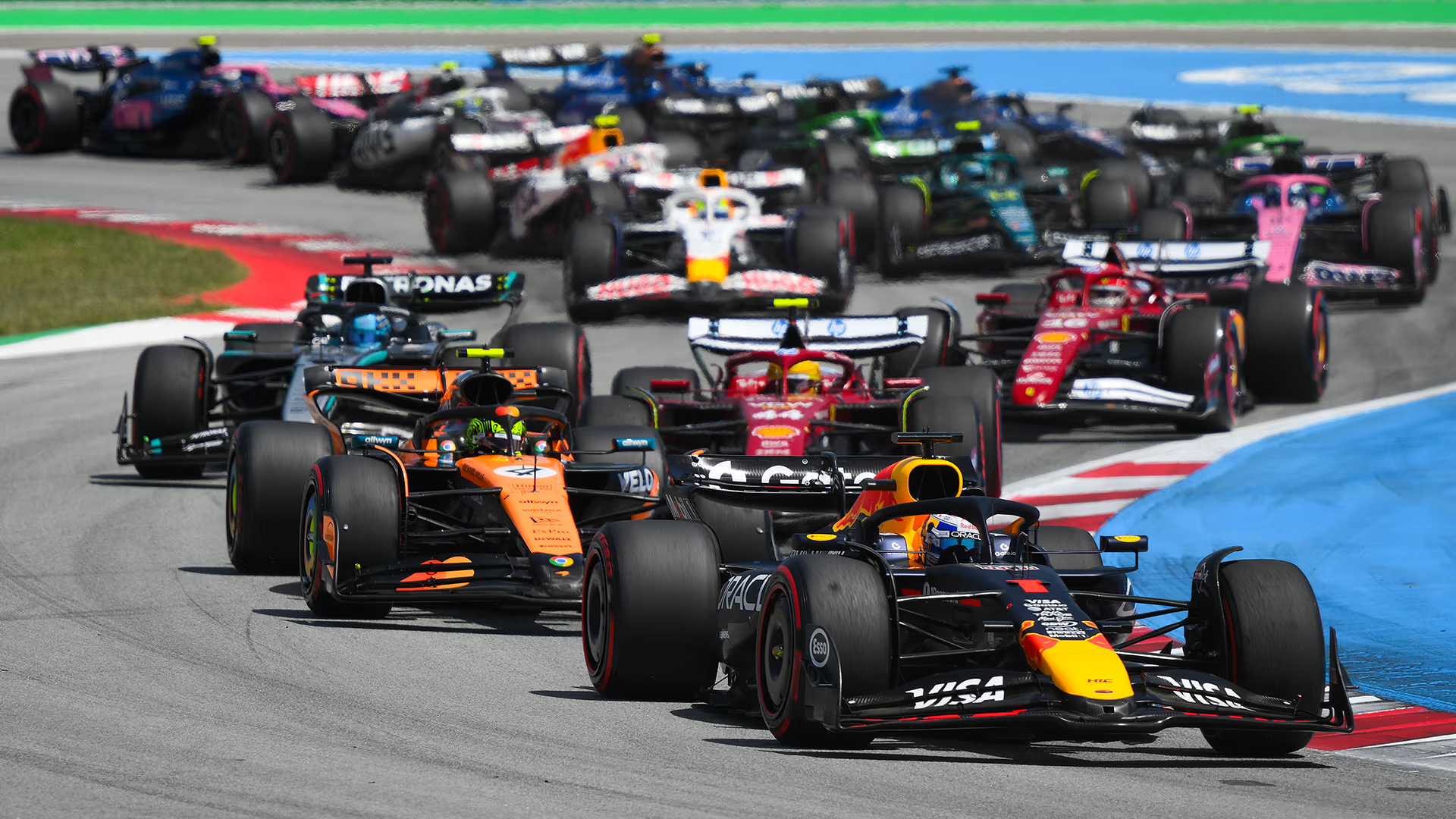
The 2026 Formula 1 regulations were designed to modernize the sport and bring the sport to a “purer” form of racing, without the gimmicks like DRS in seasons prior. However, early reactions from drivers and pundits suggest they have fundamentally changed the experience behind the wheel, and not for the better.
At the heart of the issue is the new hybrid power unit, which splits performance almost evenly between electric and combustion power. This shift has made energy management central to racing. Drivers now spend large portions of a lap conserving and deploying battery power, often “lifting” off the throttle and “coasting” into corners rather than constantly trying to take the best racing line at the highest speed.
Max Verstappen captured that frustration clearly: “The feeling is not very Formula 1-like. It feels a bit more like Formula E on steroids. As a pure driver, I enjoy driving flat out, and at the moment you cannot drive like that” (Sky Sports F1).
That frustration runs deeper than just adjusting one’s driving style. Verstappen expanded on it bluntly, saying: “For me, it’s just not enjoyable. These cars are anti-racing and not fun to drive. I just want normal driving, where you can push flat out and not think about all these systems” (Motorsport.com). His words reflect a growing discomfort with how artificial the racing can feel when so much depends on energy deployment rather than instinct.
Safety has also become a major concern. Since the new system creates large speed differences between cars depending on battery charge, as reported by Reuters, cars can “slow dramatically even when at full throttle because the electrical energy has run out,” creating unpredictable closing speeds on straights (Reuters). These conditions contributed to a high-speed crash in Japan and prompted calls from drivers for urgent changes, as there was no driver error to speak of; rather, Haas driver Oliver Bearman’s car had so much closing speed on the car ahead.
Lando Norris has been especially vocal about the risks, warning: “We are going to have a big accident… it’s chaos at the moment with the speed differences between cars” (The Guardian). His concern highlights how unpredictable the racing has become when one car is deploying energy, and another is forced to recharge.
Even where the rules succeed, namely, increased overtaking, they introduce a new problem. Early in races, cars with more available battery can attack more easily, creating short bursts of action. Over time, however, that advantage fades. As energy becomes limited, drivers are forced into conservation, thus turning Formula 1 from high-paced, intense action to an endurance test to conserve energy.
The result is a race that often starts dynamically but slows strategically, as drivers manage dwindling resources. Reporting has noted that while overtaking opportunities initially increase, performance becomes constrained by energy limits and deployment cycles later in the race (The Times). This evolving race dynamic has changed how drivers approach competition, as qualifying has also lost much of its traditional appeal.
Drivers can no longer attack every corner without thinking about energy recovery. Even governing body adjustments have only slightly reduced the need for harvesting mid-lap (Reuters). The spectacle of a driver extracting the absolute limit from the car has been replaced by a more calculated, constrained approach.
There are still positives. The variability in energy deployment has made races less predictable and, at times, more strategic (Reuters). Some fans enjoy the shifting dynamics and the increased importance of race craft decisions.
The FIA now faces a difficult balancing act. The 2026 regulations were introduced to improve sustainability and attract manufacturers. Those goals remain critical for the sport’s future. Yet the early backlash suggests that the core identity of Formula 1, drivers pushing to the absolute limit, has been diluted.
Formula 1 has always evolved, but this moment feels particularly significant. Drivers are no longer just racing each other; they are managing energy, timing deployment, and interacting with systems that are more intrusive than ever. As many of the drivers warn, the consequences for this iteration of Formula 1’s “new dawn” are not just diminished sporting pride, but also danger.
Contributed Photo/F1 wikipedia