

Just two weeks before the 2013-14 season was set to start, women’s soccer player Maxine Murchie made the decision to return to her hometown.
A Kitchener native, Murchie had committed to play south of the border last year with the University of Central Florida. But after a year, she didn’t feel like UCF was the fit for her, and she contacted Wilfrid Laurier University’s women’s soccer head coach, Barry MacLean.
But due to the rules between the Canadian Interuniversity Sport (CIS) and the National Collegiate Athletic Association (NCAA) in the States, Murchie was forced to sit out for a year of eligibility.
And in November, when the Laurier women’s soccer team won their triumphant Ontario University Athletics (OUA) championship, Murchie was on the sidelines.
“I was really sad,” she said, laughing in hindsight. “I was disappointed. It was unfortunate that I wasn’t able to experience that with my team. I was still there for them, but not being able to play makes a difference.”
What makes matters worse for Murchie is that merely two weeks after Laurier secured their OUA championship win, the CIS decided to lift the transfer rule of sitting out.
The eligibility repatriation rule was passed by the CIS with a 98 per cent approval. The motion states that beginning in Sept. 2014, “Canadian student-athletes competing at an NCAA institution who wish to come back to Canada to play at a CIS member university will be able to do so and start competing right away, instead of having to wait for one year.”
This means Murchie missed playing in the championship game with her team by less than one year.
“It does hurt the heart when I think of that, thinking that I missed out on that,” Murchie said.
Rick Osborne, the Laurier women’s hockey head coach, believes that the lift of the NCAA transfer rule could be a good thing for the CIS, but it could lead to interesting outcomes.
“I think it’s good and I think it’ll be good for the CIS in the long run to not have to wait a year,” Osborne said. “I just think it’s going to be really tricky with last-minute calls when you’ve made commitments to other players [that will] really test coaches, the reputations [and] how the teams will develop over time.”
Paul Falco, Laurier’s women’s basketball coach, echoed Osborne. “You hear now about players coming back if they’re not having a good experience, whether it’s academically or athletically. It’s a little easier for them to come back and not waste a year of playing,” he said.
Both Osborne and Falco experienced situations with NCAA transfers sitting out due to the rule. In Osborne’s case, third-year Megan Howe transferred from Oswego State University after the Division III school changed the way scholarships were distributed.
Despite trying for a compassionate appeal, which would allow a student-athlete to return immediately, the CIS rejected Howe and she was forced to sit last year before joining the Hawks in the 2013-14 campaign.
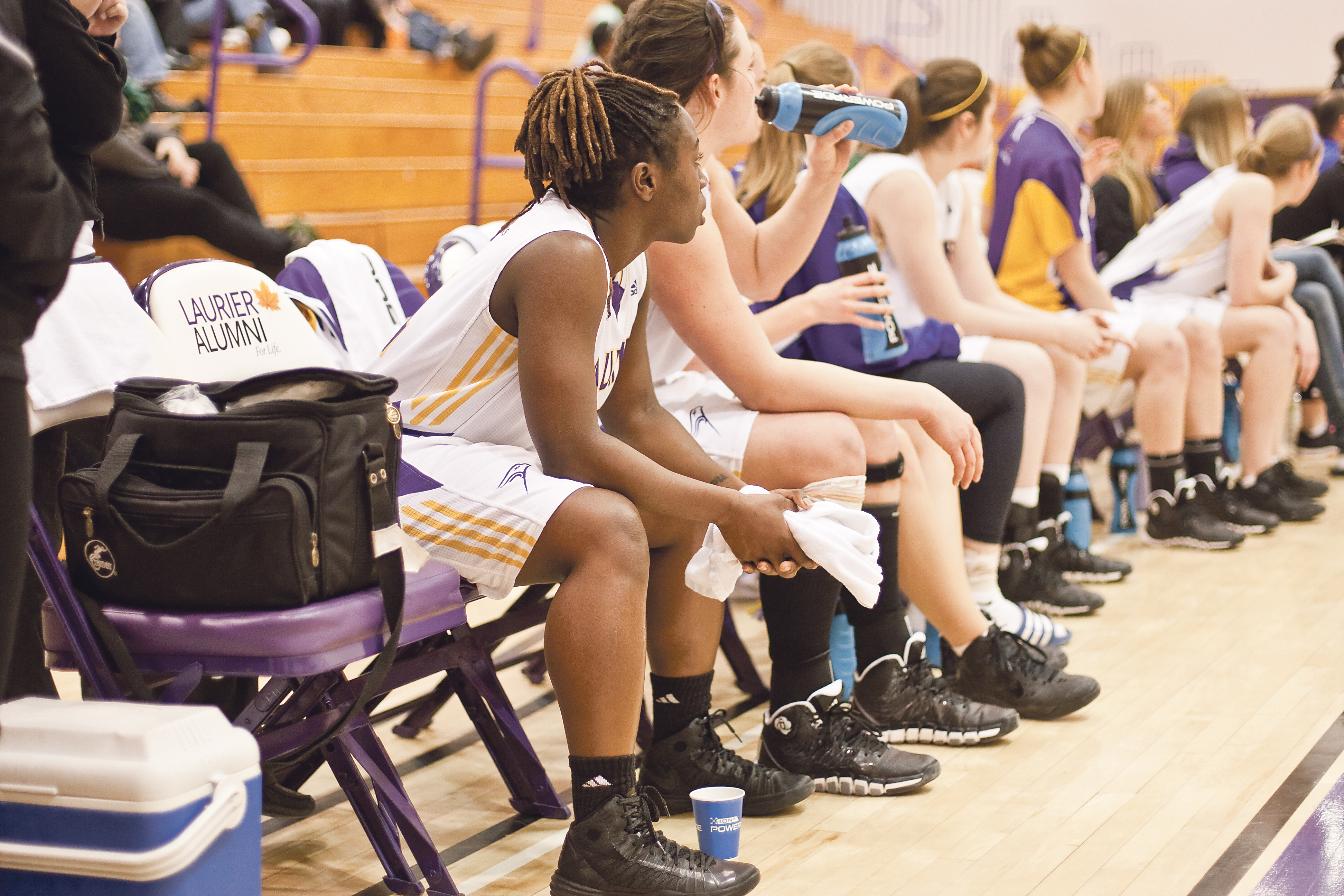
With Falco, fourth-year Whitney Ellenor sat out before joining Laurier in 2012-13 after a stint with Canisius College. She trained with the team, but the rule kept her from being fully integrated in the women’s basketball experience.
Murchie believes that the rule being dissolved can be beneficial to the student-athlete’s experience.
“I mean I went through it, and I came back and I trained my butt off on my own, but say that someone did really want to come back but there was that rule that really made it or break it for them. I would have spent another year in that environment uncomfortable, and that really would have sucked,” she said.
Though Osborne and Falco both believe that there will be an increase in returning Canadian student-athletes, both coaches said their recruiting won’t change much. Falco mainly recruits from Ontario high schools, while Osborne explained that Laurier’s women’s hockey team tends to be fully recruited early.
However, with the right player returning, they would be interested.
“If they contact us, we follow up, but I’m not one to go and actively pursue them,” Falco said. “I have a feeling there might be more girls contacting us in the upcoming years than normal.”
“I’m understanding of the circumstances. It would depend on how much I knew of her in the recruiting process,” Osborne said. “Sometimes it takes more than a year to work your way into a team.”
Although the change in the ruling is helpful for the CIS and athletes, Osborne worries that it might also bring repercussions to the reputations and processes of the schools.
“I can just see a double standard setting in and that can help us as much as harm us,” he warned. “The right player, the right circumstance, we would be very interested. The wrong player, the wrong circumstances and you’d have them in another locker room.”





Leave a Reply
You must be logged in to post a comment.