

On May 14, 2013 the Wilfrid Laurier University Faculty Association (WLUFA) and the university met to exchange proposals for the negotiation of a new contract for Contract Academic Staff (CAS).
Since then, WLUFA, which represents the CAS, and the university, have had 20 bargaining meetings.
CAS is aiming to avoid a strike and gain recognition, health and dental benefits, job security and reasonable compensation for their dedication to teaching more than half of Laurier’s students.
“We were intended to be temporary [and] we ended up being the main educators at Laurier,” explained Carolyn Ensley, who has been a CAS member since 2004. “In 2008 just over 30 per cent of students were taught by CAS and by 2013 it has raised to 52 per cent.”
Kevin Crowley, director of communications and public affairs at Laurier, explained that the number of CAS members employed by the university each year is pretty consistent.
“In the contract for full-time faculty with WLUFA, the contract stipulates that the university is permitted to employ enough CAS members to teach up to 35 per cent of the courses offered,” he said.
While it is difficult to know for sure, as part-time faculty have different titles at every institution, Crowley said the university believes the number of CAS they employ is “on par with other universities.”
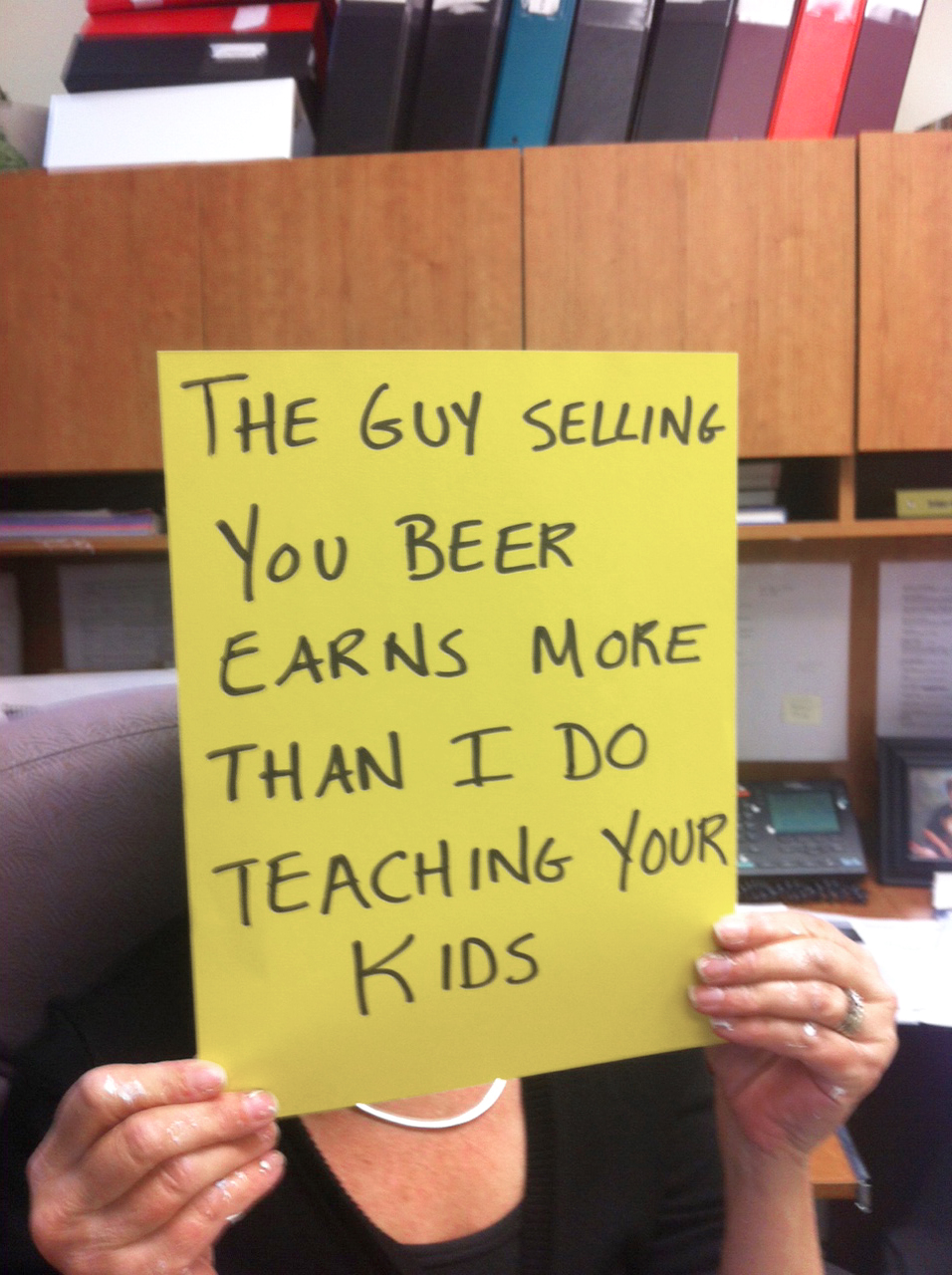
Recently, CAS has been reaching out to students to express their contentions through Tumblr, where they’ve posted photos which tell one sentence stories of their struggles as CAS.
Jason Sager, who posted a photo to the site, has been a CAS professor for five years at Laurier and explained that he wants to show “the contribution that CAS makes to the university” and “that [they] are here to ensure students get the best education they can.”
“Laurier’s mission statement is inspiring lives and that’s what we do,” Sager added.
Kimberly Ellis-Hale, who has taught at Laurier for 14 years and has been a member of CAS for most of her employment, commented on the extra work CAS professors put in, despite only getting paid for the courses they teach.
“I think we deserve a little bit more than what we are getting…we aren’t asking for the moon,” Ellis-Hale said.
Currently, CAS professors make about $7,000 per course. $24,000 is the maximum amount a CAS professor can make in a year, which prompts many to seek part-time teaching opportunities at other post-secondary institutions, in addition to teaching at Laurier.
Job security is another primary concern, as Laurier hires CAS members on a four month contract basis. Laurier also has up to a week before the class starts to cancel the class.
Bill Salatka, president of the WLU Faculty Association (WLUFA) expressed their position on the negotiations.
“WLUFA wants to make sure our CAS are fairly treated, fairly compensated and [have] adequate opportunities for employment,” he said. “CAS has always been an integral part of Laurier and they should be treated that way.”
In regard to the bargaining so far, Crowley said there has been agreement on non-monetary and non-compensation matters.
“The message we’ve been getting from the province is that there’s not a lot of money to go around, especially for wage increases, so you have to hold the line,” he continued. “So that’s pretty much out of our hands and out of the CAS hands.”
The last time CAS at Laurier chose to strike was in March 2008 and the collective agreement wasn’t resolved until early April. The strike resulted in numerous class, tutorial and lab cancellations just weeks before final exams.
This junction is the reason why a conciliator, a third-party government facilitator, has been requested. Crowley noted that this is normal for most bargaining at the university.
“What’s unusual in a positive way, I think, is that in this case WLUFA and the university are jointly asking for conciliation,” Crowley commented. “I think this indicates a fair amount of agreement and progress.”
– with files from Marissa Evans




Leave a Reply
You must be logged in to post a comment.