

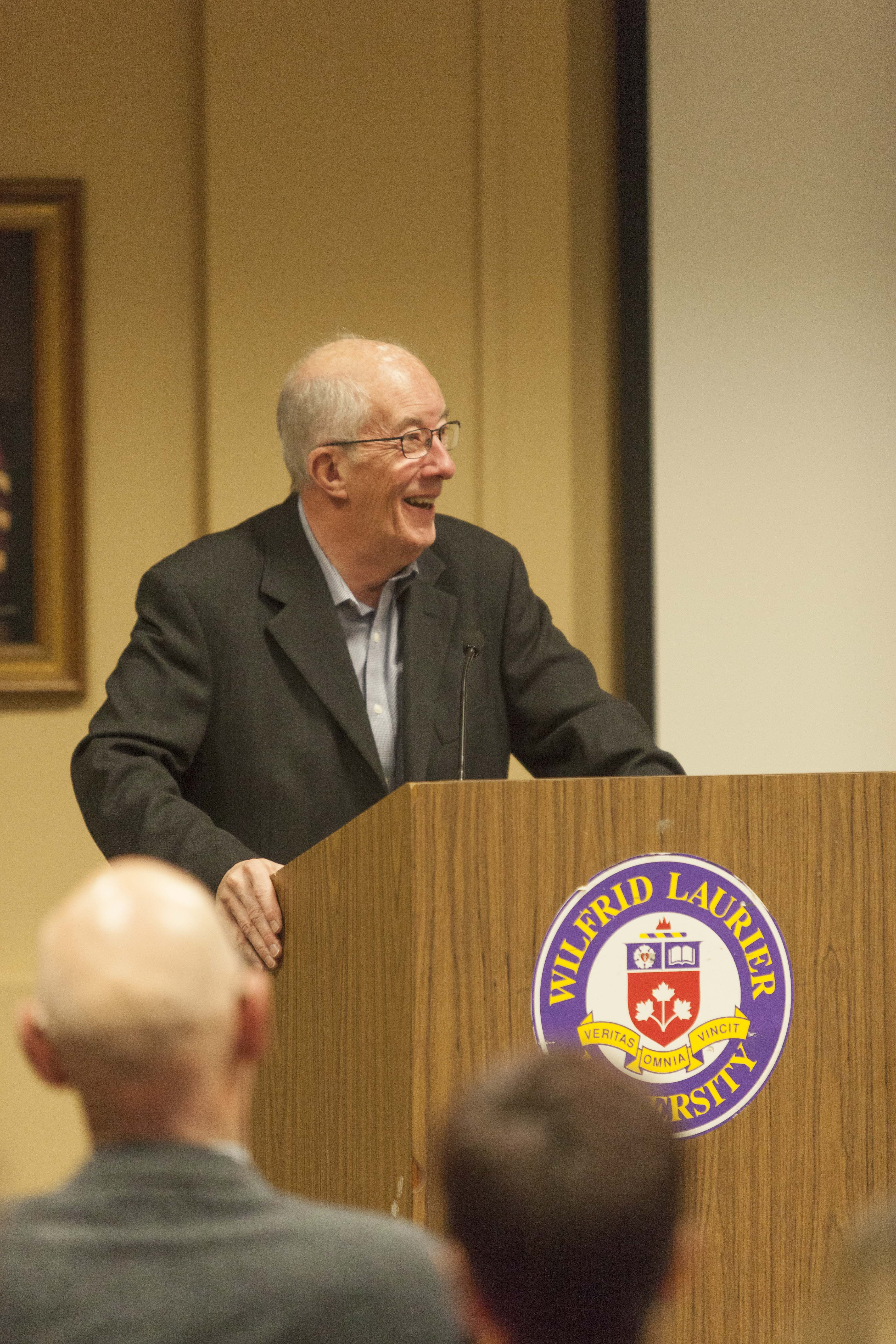
The department of religion and culture has a long-standing history at Wilfrid Laurier University.
Since its humble beginnings at Waterloo Lutheran University, the department has grown, recently celebrating its 40th anniversary.
Starting as the school of religion and culture, the discipline has grown into a full-fledged department, offering a bachelors of arts, masters program and joint PhD with the University of Waterloo.
“We teach courses that attract a large number of students a year,” said Carol Duncan, associate professor and chair for the department of religion and culture. “Thousands of students take religion and culture as part of their degree studies.”
Over the years, Duncan has seen the growth of the department. She originally joined the department in 1997. The department at that point only had six full-time faculty members. That number has since grown to nine.
“One of the focal points is the focus on modernity and also methodologies that are rooted in social science perspectives on religion, as well as culture studies.”
Brent Hagerman came to WLU back in 1992 to study religion and culture as an undergraduate student. Since then he has completed graduate degrees and is now a contract academic staff member for the department.
“I always thought it was a great department, that’s why I keep coming back.”
When Hagerman first started studying in the 90s, he noted that the department seemed to be based more on textual analysis. Since completing his graduate studies in the early 2000s, he has seen the growth of the department first hand.
“Now if you look at the department, there are more people who do more ethnographic fieldwork, in addition to textual analysis,” Hagerman said.
The department hasn’t gone without its challenges though. In the last six years, three of the longest-serving members of the department retired.
One of these people was Peter Erb, who was among those honoured on Oct. 23 with a special lecture held in the Paul Martin Centre.
Among the stereotypes in studying religion and culture, the intent of engaging in the study of religion seems to be clouded by judgment.
“That one has to be a religious person in order to study religion, that’s probably one of the biggest stereotypes of religious studies. For some that might be the case, but religious studies is an academic study. It is really interdisciplinary as religion is social phenomena,” Duncan explained.
“I really see the work we do as something important in understanding and I think developing perspectives for addressing social issues.”
From his own experiences studying at WLU, Hagerman believed that studying in the department of religion and culture broadened his way of thinking.
“What religious studies did was broaden my thinking and it sparked my interest into the academic study of religion, getting away from the personal study of religion to the objective study of religion,” he said.
Moving forward with the development of the university, Duncan sees the department’s members remaining “major contributors.”
“I see us continue being major contributors to innovative teaching and learning. The department really holds innovative teaching as a core value, something we do participate in,” said Duncan.
Hagerman mentioned that back when he started his undergraduate studies at the university, he took a course called “The Historical Jesus” that really sparked his interest in the discipline. For him, it really emphasized the value in studying religion and culture.
“The academic study of religion is a really good example of what the humanities do best, which is teaching students the skills of critical thinking and critical reading.”




Leave a Reply
You must be logged in to post a comment.